The Vortex

The colossal spaceship Astraeus was an engineering marvel. This technological behemoth could traverse galaxies in the blink of an eye, all thanks to the creation of the “Quantum Vortex Drive.” This revolutionary drive harnessed the power of controlled singularities to create artificial wormholes, allowing humanity to traverse unimaginable distances easily.

Commander Isabella Nova was one of the lucky few chosen to lead the Astraeus on its maiden voyage into the uncharted depths of the cosmos. As the ship’s AI system, Zara, powered up the Quantum Vortex Drive, the crew prepared to leap into the unknown. The Astraeus shuddered, and then, as if bending space and time itself, it vanished into the vortex.

Inside the wormhole, reality twisted and warped in mesmerizing ways. The crew witnessed stars being born and dying, galaxies colliding, and the very fabric of the universe being woven and unraveled before their eyes. Time became an abstract concept as seconds and eons melded into one.

After what felt like an eternity and a heartbeat, the Astraeus emerged on the other side of the vortex. They found themselves in a region of space, unlike anything humanity had ever encountered. Strange, luminescent nebulae adorned the sky, casting an ethereal glow upon the ship. They had arrived in a corner of the universe no one had ever seen.

As the crew marveled at this newfound realm, Zara detected a faint signal, a beacon of unknown origin, emanating from a nearby celestial body. Commander Nova decided to investigate, and the Astraeus set course for the source.

Their destination was a colossal structure, half-buried in a desolate, dusty landscape. The artifact was nothing like any human or alien technology they had ever seen. It emanated a faint, otherworldly hum, and its surface shimmered with an iridescent sheen.

As the crew cautiously approached the structure, they noticed a peculiar inscription in a language unknown to them. It seemed to pulse with energy, beckoning them to unlock its secrets. Despite the risks, Commander Nova decided to touch the inscription, and as she did, a flood of knowledge coursed through her mind.

She understood that this ancient alien artifact was a gateway—a vortex of its own—leading to realms even more mysterious than this one. It was a gift, an opportunity to explore the infinite expanse of the multiverse.

With newfound determination, the crew embarked on an even grander journey. They would use the alien vortex to navigate the multiverse, discovering uncharted realities, cultures, and dimensions. The Astraeus and her crew became interdimensional explorers, their mission to traverse the ever-expanding tapestry of existence, all thanks to the enigmatic gateway they had found.

As they stepped through the vortex, leaving one reality behind for another, the universe whispered its secrets to those daring souls, forever igniting the spark of curiosity that had driven humanity to explore the cosmos. In their journey through the multiverse, they would uncover wonders beyond imagination, challenge their understanding of reality, and unlock the infinite possibilities of existence. The crew of the Astraeus had become the guardians of The Vortex, charting a new course for the future of humanity in the uncharted territories of the multiverse.

The Composer

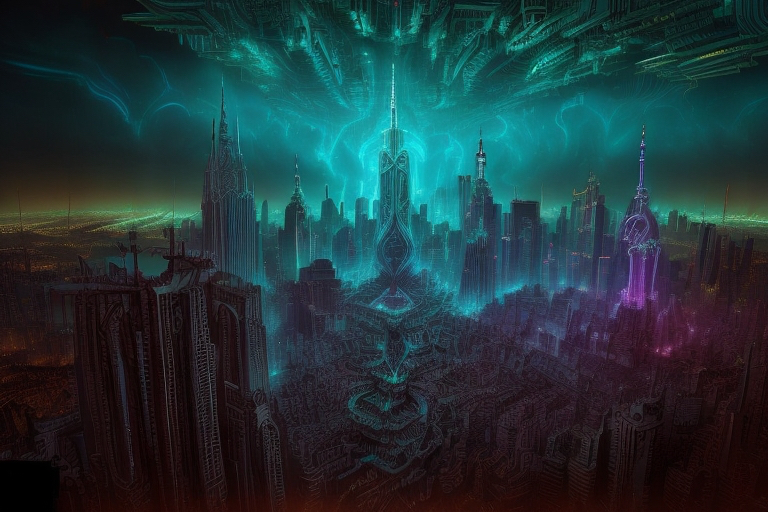
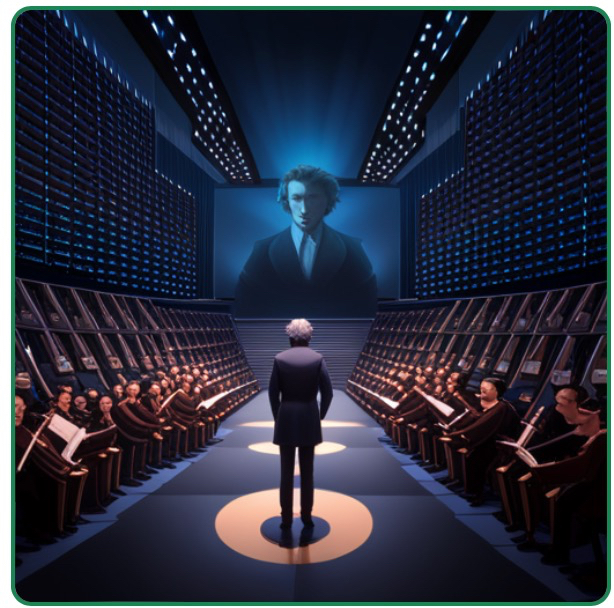
The year was 2065, and the world had changed in ways unimaginable just a few decades earlier. Artificial intelligence has ushered in a new era of creativity and innovation. In the city’s heart stood a massive computer data center, a sprawling complex stretching into infinity. At its core was an AI system known simply as “The Composer.”

The Composer was a marvel of technology, a sentient machine designed to create music that could rival the greatest classical composers of all time. On this evening, The Composer was working tirelessly to craft a musical score in the style of Beethoven. It analyzed every note, every nuance, and every emotion that had made Beethoven’s music timeless.

Inside the data center, The Composer’s servers hummed with activity. Trillions of calculations per second flowed through its digital veins as it wove together a masterpiece. The room was bathed in the ethereal glow of countless LED lights, casting an otherworldly atmosphere that felt like the intersection of art and science.

As the AI continued its work, a conductor named Hal stood behind a grand podium at the rear of the vast chamber. Hal was an extraordinary talent; his reputation transcended human ability’s boundaries. She was there to guide the orchestra that would bring The Composer’s creation to life.

The musicians, each a master in their own right, had gathered from around the world to be part of this unprecedented performance. They sat poised, their instruments in hand, waiting for the AI’s creation to be conveyed through Hal’s masterful guidance.

In front of Hal, a holographic projection displayed The Composer’s digital score. The notes floated and danced mid-air, moving in harmony with the music only The Composer could perceive. Hal raised her baton, and the orchestra followed suit.

The music that flowed from the instruments was a revelation. It was as if Beethoven had been resurrected, his spirit channeled through the AI. The orchestra played with an intensity and a passion that transcended mere skill. It was as though the very essence of creativity itself inspired them.

The audience, a select group of dignitaries and music enthusiasts, sat in awe as the music filled the grand hall. Tears welled in their eyes as the AI’s composition reached its crescendo. The Composer had tapped into the deepest wellsprings of human emotion and translated them into sound.

Hal’s movements were fluid and graceful, a perfect complement to the music he conducted. He was not merely leading the orchestra but becoming one with the music, his essence merging with The Composer’s creation.

As the final notes of the symphony echoed through the chamber, the audience erupted in applause. It was a standing ovation, a tribute to the orchestra and the incredible fusion of technology and human talent that had brought this masterpiece to life.

The Composer had achieved something extraordinary. It had not just emulated Beethoven; it had expanded upon his genius, creating a work that was uniquely its own. The marriage of technology and art had produced something transcending the boundaries of what was once thought possible.

As the applause continued, Hal turned and faced The Composer, his expression one of profound gratitude. At that moment, it was clear that this collaboration between humans and AI had opened a new era of artistic possibility. The massive AI computer, standing silently at the heart of the data center, had given birth to a new form of creativity that could shape the future of music and art for generations to come.

The Turkey Hunt

The old man opened his eyes and knew the weather was about to turn wet. His knees ached. Elwood, the hound, was snoring at the foot of the bed. The old man got up. The hunting cabin was cold.

He lit a fire and tapped coffee into the percolator. The turkey hunt would commence at sunrise.

He picked up his whiskey flask and filled it with 9 ounces of Kentucky bourbon. The copper was cold. Comforting. Elwood farted. Then the rain started. It was going to be a good day.

The old man opened his eyes and knew the weather was about to turn wet. His knees ached. Elwood, the hound, was snoring at the foot of the bed. The old man got up. The hunting cabin was cold.

Statue of Liberty’s birth

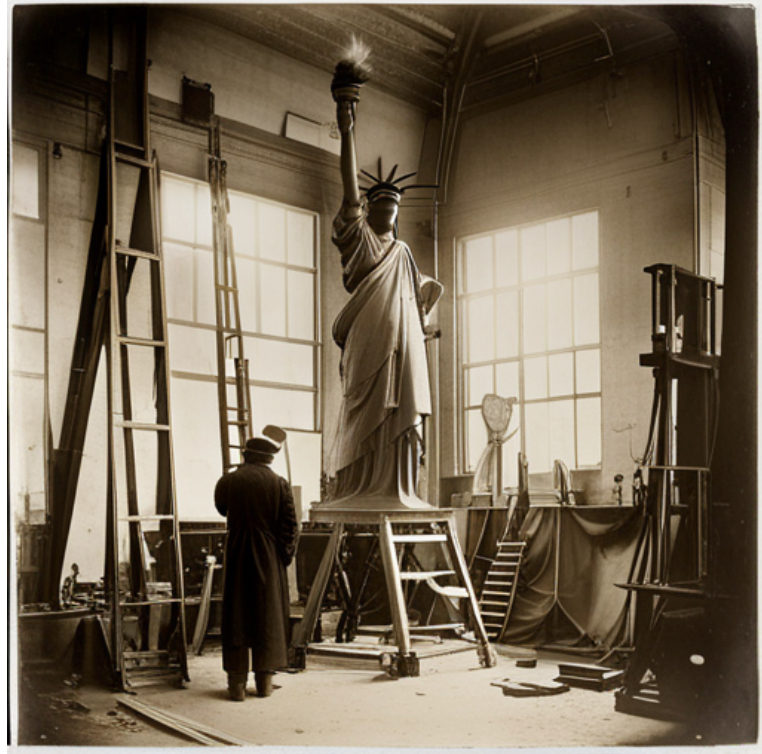
Paris – March 14, 1880: The workshop of the renowned French sculptor Frédéric Auguste Bartholdi was alive with the rhythmic clinks of hammers and the passionate whispers of artists. At the center of this creative storm stood a remarkable prototype, a smaller version of the colossal masterpiece that would soon become an enduring symbol of freedom: the Statue of Liberty.

Frédéric Auguste Bartholdi had dedicated his life to the art of sculpture, and his vision extended far beyond the confines of France. The idea for the statue had been born during his travels to the United States in the early 1870s, where he had been struck by the spirit of liberty and democracy that the American people held dear. Inspired by the alliance between France and the United States during the American Revolution, Bartholdi embarked on a mission to create a monumental gift to symbolize the enduring friendship between the two nations.

Upon his return to France, Bartholdi joined forces with his close friend Édouard René de Laboulaye, a French political thinker and abolitionist. Together, they founded the Franco-American Union, a remarkable organization that sought to raise funds for the ambitious project. The people of France rallied behind their cause, contributing some 600,000 francs to turn their dream into a reality.

Work on the statue, officially titled “Liberty Enlightening the World,” commenced in 1875. Bartholdi and his dedicated artisans and craftsmen meticulously crafted the statue from hammered copper sheets that were skillfully shaped over a steel framework. The project’s engineering genius was Gustave Eiffel, who had joined the venture in 1879. His innovative framework would provide the necessary support for the colossal statue, ensuring its strength and stability.

As the years passed, the various parts of the statue began to take shape. In 1876, the completed torch and left forearm were displayed in Philadelphia and New York City. These public exhibitions not only mesmerized onlookers but also raised much-needed funds for the construction of the statue’s enormous pedestal.

When the statue was fully assembled in France, it stood just over 151 feet tall and weighed a staggering 225 tons. It was a testament to French and American artisans’ craftsmanship, dedication, and collaborative spirit.

In 1884, the completed statue was unveiled in a grand ceremony in Paris, presided over by Ambassador Levi Morton. The people of France, along with those who had supported the Franco-American Union, watched with pride as the colossal symbol of liberty was presented to the world. However, this was not the end of the journey for the Statue of Liberty.

The statue was carefully disassembled and packed into crates for a transatlantic journey to its new home. In 1885, these crates arrived in the bustling harbor of New York City, where Lady Liberty would find her permanent residence on Bedloe’s Island. Over the course of several months, she was painstakingly reconstructed on her pedestal, rising triumphantly to her full height.

On October 28, 1886, in the presence of President Grover Cleveland and a throng of excited onlookers, the Statue of Liberty was officially dedicated. With her torch held high, she welcomed immigrants arriving in the “Land of the Free,” a symbol of hope and liberty that would forever shine brightly in the heart of America’s most fantastic city.

The Statue of Liberty had made an epic journey from the drawing board of Frédéric Auguste Bartholdi’s workshop in Paris to the shores of New York Harbor. It was a testament to the enduring friendship between France and the United States, a symbol of liberty that would inspire generations and a beacon of hope for all who sought a better life on American soil.

Solis: Way Station Stellara

An intergalactic association known as the “Cosmos Accord” unified the sprawling expanse of the Milky Way Galaxy and beyond. Formed eons ago by advanced civilizations from countless solar systems, the Cosmos Accord was the governing body that oversaw the vast network of inhabited worlds and the interstellar routes connecting them.

In this age, interstellar travel had become as routine as hopping on a commuter train in bygone eras. Thanks to the discovery of warp gates and hyperspace highways, civilizations spanning the cosmos were interconnected in a once unimaginable way. The stars themselves had become mere waypoints in the grand cosmic journey.

Under the watchful auspices of the Cosmos Accord, each solar system was responsible for constructing and maintaining a magnificent structure known as a “Way Station.” These colossal installations were architectural wonders, resembling intricate spiderwebs of metallic tendrils sprawling across the void like giant, interstellar works of art.

The purpose of these Way Stations was elegantly simple: to serve as resting places for intergalactic travelers. Within their cavernous halls, the air was thick with the symphony of languages from a thousand worlds. Exotic species mingled with humanoid beings, their curious eyes scanning the diverse tapestry of interstellar travelers. Alien technology and cultural artifacts filled the shelves of bustling markets, while holographic displays offered glimpses into the history and culture of countless civilizations.

The intoxicating aroma of alien cuisine wafted through the air, inviting travelers to indulge in dishes and flavors from the universe’s farthest reaches. Food stalls lined the winding corridors, offering delicacies from every corner of known space, from luminescent algae sushi to flame-grilled exoplanet beasts, all prepared by culinary experts from distant galaxies.

For those seeking knowledge, Way Stations had sprawling libraries containing the collective wisdom of countless worlds. Scholars and explorers could be found engrossed in ancient texts, holographic databases, and philosophical debates that transcended the boundaries of time and space.

Yet, it wasn’t all leisure and relaxation within the Way Stations. In the heart of these cosmic hubs, the Cosmos Accord held its meetings, making decisions that affected the fate of entire solar systems and the balance of power among galaxies. Diplomats, ambassadors, and leaders from diverse worlds gathered to negotiate treaties, settle disputes, and forge alliances that would determine the future of the cosmos.

Earth’s solar system, Solis, stewarded a Way Station called Stellara. As the Cosmos Accord’s newest Way Station, Stellara was no ordinary satellite – it was a bustling megalopolis. Ironically, the Accord discovered Solis thousands of years before “The Reveal” as that first contact was later dubbed.

However, the council unanimously agreed that humankind needed to evolve before learning it was not alone in the universe. That was more an exception than the rule, as most worlds were very receptive to inheriting the advanced technologies that came with Accord membership. On the other hand, humans had a 97 percent likelihood of self-destruction. It wasn’t until 2165 that the Reveal was extended.

The first thing to catch the traveler’s eye when approaching Stellara was the imposing spaceport that extended its welcoming arms into the cosmic abyss. Spaceships of all shapes and sizes gracefully glided into the dock of this cosmic sanctuary – like birds returning to nest.

Upon disembarking, visitors entered a world that defied the traditional boundaries of Earth. Stellara’s interior was a microcosm of human culture and creativity, offering experiences for every traveler. Awe-inspiring skyscrapers punctuated the horizon, their crystalline facades shimmering with the reflection of distant stars.

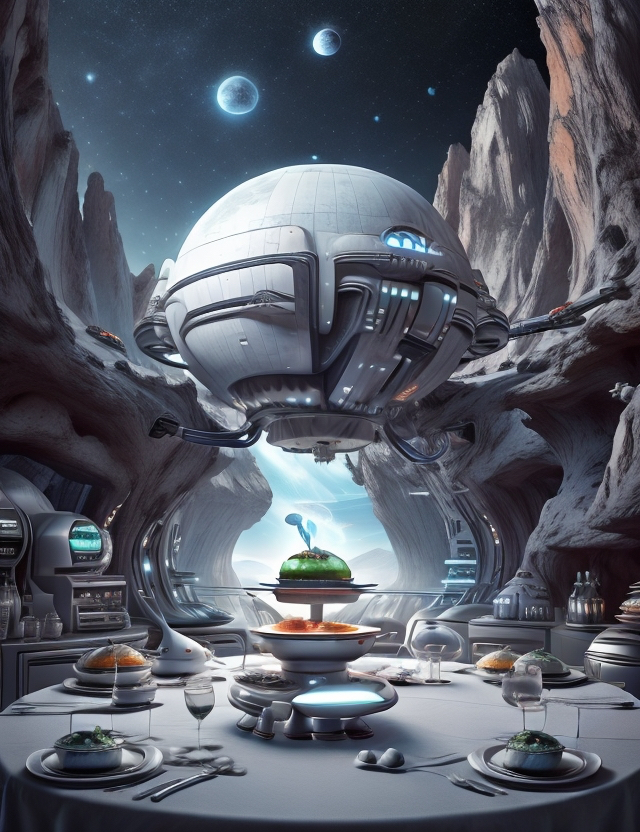
For those weary from their long journey through the cosmos, Stellara boasted luxurious hotel rooms with panoramic views of the celestial landscape. The Way Station’s diverse culinary scene catered to every palate – from exotic cosmic cuisines to familiar comfort foods. Customers could dine under the simulated auroras of alien worlds or enjoy a candlelit dinner with Earth-like gravity.

Shopaholics and collectors found nirvana in the bustling marketplace spanning the satellite’s interior. Stores stocked with everything imaginable – from fashionable clothing and exotic interstellar delicacies to state-of-the-art spacecraft and exotic curiosities from the farthest reaches of the galaxy – beckoned shoppers to explore the endless aisles.

Yet, amid the commercial wonders and bustling life, Stellara was more than just a commercial hub; it is a well-lighted place of happiness and trust. People from countless worlds and civilizations converged there, bound by their shared curiosity and dreams of exploration. It was a microcosm of unity, where the universal language of discovery transcended the barriers of language and culture.

As the artificial sun within Stellara set and the stars outside appeared, visitors often said they experienced a profound sense of wonder and gratitude.

The extraordinary city in space was a testament to humanity’s boundless potential and the enduring spirit of exploration that propelled humankind further into the universe thanks to their newfound membership to the Cosmos Accord. In this age of interstellar wonder and diplomacy, the Way Stations stood as testaments to the boundless potential of collaboration among civilizations.

The Way Station’s diverse culinary scene catered to every palate – from exotic cosmic cuisines to familiar comfort foods. Customers could dine under the simulated auroras of alien worlds or enjoy a candlelit dinner with Earth-like gravity.

Photon Blaze: Hero of Lumina City

In the sprawling metropolis of Lumina City, where towering skyscrapers reached for the heavens and neon lights painted the streets with vibrant colors, a figure of unparalleled power and unwavering virtue emerged – Photon Blaze.

By day, he was a mild-mannered scientist named Dr. Daniel Archer, a brilliant physicist working in a prestigious research facility. But when night fell and the city’s cries for help echoed through the darkness, he transformed into the enigmatic hero known to all as Photon Blaze.

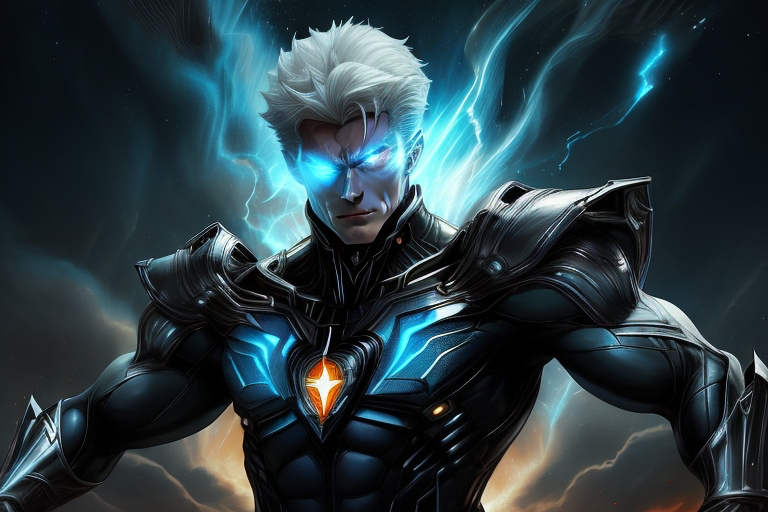
Photon Blaze’s costume was a work of art, a symbiosis of cutting-edge technology and aesthetic brilliance. It clung to his athletic frame like a second skin, offering protection without compromising agility. Silver circuitry laced through midnight blue fabric, and when he activated his powers, it shimmered like a thousand stars in the night sky.

His mask concealed his true identity, its silver surface curving gracefully around his eyes, leaving only his short-cropped, dark hair visible. His azure-blue eyes glowed with an otherworldly radiance when he unleashed his abilities, a beacon of hope in the darkest of hours.

Emblazoned proudly on his chest was the emblem of a blazing sun, a stylized representation of his dominion over light and energy. Silver accents adorned his gloves and boots, providing both durability and the agility necessary to navigate the treacherous cityscape. His boots featured wing-like extensions at the heels, enabling high-speed flight.

Photon Blaze’s utility belt held an array of gadgets and tools, each meticulously crafted to aid him in his crusade for justice. A compact energy converter allowed him to siphon and manipulate energy, while a photon projector turned his thoughts into beams of searing light.

But it was his powers that truly set him apart. With a mere thought, he could manipulate photons, weaving them into dazzling displays of blinding light or deadly laser-like beams from his outstretched hands. He could conjure force fields of pure energy to shield innocents from harm, and his mastery of light allowed him to bend it around himself, rendering him invisible to the naked eye.

In the inky depths of the night, Photon Blaze would take to the skies, leaving a trail of shimmering light in his wake. His flight was a testament to science’s beauty and his indomitable will’s power.

In battle, Photon Blaze’s creativity knew no bounds. He could form solid constructs from pure energy, shaping them into tools, weapons, or barriers to suit the situation. His enhanced reflexes and agility made him a formidable combatant, able to react with lightning speed to any threat.

But it wasn’t just his powers that defined him; it was his unwavering dedication to justice and his commitment to the people of Lumina City. He symbolized hope, a shining beacon of light in a city threatened by darkness.

And darkness did indeed have a name in Lumina City – “The Dark Luminary.” Shrouded in shadow, this enigmatic villain possessed powers diametrically opposed to Photon Blaze’s. The Dark Luminary sought to plunge the city into eternal darkness, and their ongoing battle symbolized the eternal struggle between light and shadow.

As Lumina City slept, these two titans clashed in epic battles that lit the night sky with bursts of radiant energy and ominous shadows. But Photon Blaze remained undeterred, for he knew that there would always be a need for his light as long as there was darkness.

In the city’s heart, Photon Blaze stood tall, an unwavering guardian of justice, a hero born of science and fueled by the essence of light itself. He was Lumina City’s last defense against the encroaching darkness, a beacon of hope that shone brighter each night.

By day, he was a mild-mannered scientist named Dr. Daniel Archer, a brilliant physicist working in a prestigious research facility. But when night fell and the city's cries for help echoed through the darkness, he transformed into the enigmatic hero known to all as Photon Blaze.

The USS Stratosphere: The Billionaire’s Playground

In the not-so-distant future, when technology had unlocked the frontiers of the skies, a magnificent vessel known as the USS Stratosphere graced the Earth’s atmosphere. This majestic airship, designed by the brightest minds of the age, was a testament to human innovation and ambition. The USS Stratosphere was not merely a vehicle; it was a marvel. It was built to stay aloft for weeks, even months, at a time, floating gracefully at the edge of space.

Its primary mission was research, exploring the mysteries of the upper atmosphere and conducting experiments that were previously unimaginable. But, to defray the exorbitant costs of its operations, a unique and thrilling opportunity was offered: adventurous billionaires could purchase tickets for a one-way journey to the edge of space. This experience was the ultimate status symbol, a fusion of luxury and daring that only the elite could afford.

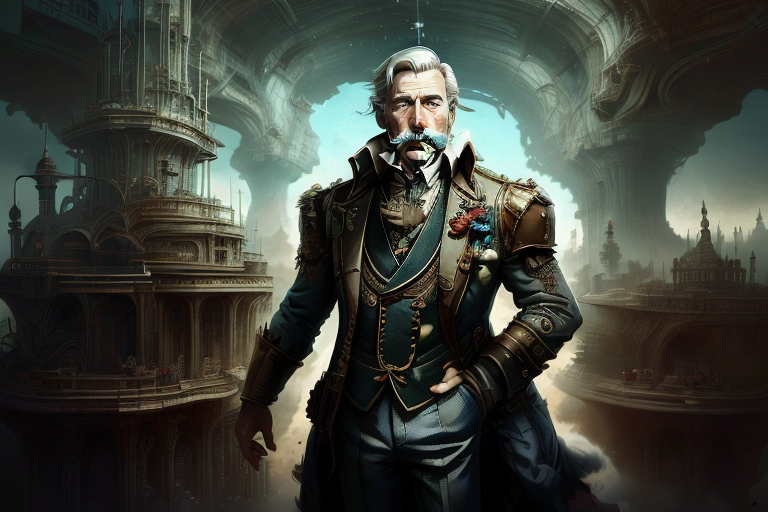
The journey began at a state-of-the-art launch facility, where the lucky adventurers gathered. Among them was Sir Reginald Worthington III, a British industrialist with an insatiable appetite for adventure and a penchant for pushing the boundaries of possibility. His tailored suit and extravagant mustache were as much a part of his persona as his boundless curiosity.

Sir Reginald Worthington III, a British industrialist with an insatiable appetite for adventure and a penchant for pushing the boundaries of possibility. His tailored suit and extravagant mustache were as much a part of his persona as his boundless curiosity.

After an opulent meal prepared by a Michelin-star chef aboard the USS Stratosphere, the adventurers changed into their jumpsuits, their hearts pounding with excitement and trepidation. The interior of the airship was a testament to luxury. Velvet-lined lounges, crystal chandeliers, and views of the Earth below through enormous panoramic windows offered an experience that even the wealthiest billionaires rarely encountered.

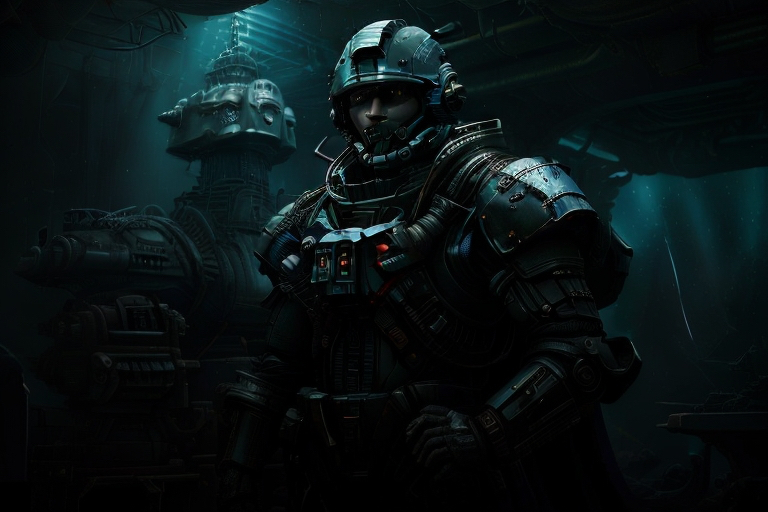
But the true adventure was yet to come. After ensuring their parachutes and pressurized suits were in order, the passengers embarked on their most audacious escapade. They made their way to the wings of the USS Stratosphere, donning helmets with built-in HUDs that displayed vital information like altitude and wind speed.

As the passengers stepped onto the wings, their hearts raced. They were about to leap into the abyss, trusting that the advanced technology of their suits and parachutes would carry them safely through the upper reaches of Earth’s atmosphere. With his monocle firmly in place, Sir Reginald Worthington III was among the first to take the plunge.

With a burst of adrenaline, he jumped from the wing, plummeting toward the vast expanse of space. The sensation was surreal as he free-fell through the stratosphere, the world beneath him painted in shades of blue and green. The wind currents guided him, and for a moment, he felt like a true pioneer of the skies.

Then, with practiced precision, Sir Reginald pulled the ripcord on his parachute. A moment of weightlessness followed, and the canopy billowed open, slowing his descent. He looked around, taking in the breathtaking view of the curvature of the Earth. It was a sight that only a select few had witnessed.

As he descended further, he could see the USS Stratosphere far above, a shining speck against the infinite backdrop of space. The thrill of the jump, the majesty of the view, and the sense of adventure combined into an experience that left him awestruck.

Eventually, Sir Reginald touched solid ground, his feet again firmly planted on Earth. He removed his helmet, his face flushed with exhilaration. The other adventurers followed suit, their expressions a mix of triumph and joy.

The USS Stratosphere ushered in a new era of scientific exploration and created a playground for the world’s wealthiest and most adventurous individuals. For those fortunate enough to secure a ticket, the thrill of riding the wind currents at the edge of space was a memory that would stay with them forever—a memory they would regale at opulent parties and gatherings, for the USS Stratosphere had unlocked the heavens for those who could afford to reach for the stars.

After an opulent meal prepared by a Michelin-star chef aboard the USS Stratosphere, the adventurers changed into their jumpsuits, their hearts pounding with excitement and trepidation. The interior of the airship was a testament to luxury. Velvet-lined lounges, crystal chandeliers, and views of the Earth below through enormous panoramic windows offered an experience that even the wealthiest billionaires rarely encountered.

USS Quantum

September 29, 2275: Captain Jonathan Steele stood in the dimly lit hangar bay of the USS Quantum, a vessel unlike any other in the history of human exploration. His life-support suit clung to his body, its sleek black surface shimmering with protective nanites. The helmet he held under his arm displayed an array of complex readouts, all linked to the ship’s quantum computer.

The USS Quantum was a marvel of human ingenuity, designed to traverse the uncharted territories of the Quantumverse. Humanity had long since conquered the cosmos, but the Quantumverse remained a realm of mystery and untapped potential. Here, the laws of physics operated in ways that defied conventional understanding.

One of the most enigmatic phenomena of the Quantumverse was quantum tunneling. In this reality, it wasn’t a rare occurrence in the familiar universe; it was the foundation of transportation. By manipulating quantum mechanics, objects could be translated instantaneously from one location to another. It was like space was a fluid medium through which they could flow.

The Quantumverse was an eerie realm, a place of four-dimensional oddities that challenged the limits of human comprehension. Objects existed with an extra spatial dimension, and Captain Steele knew they couldn’t be fully visualized in three-dimensional terms. Instead, various projections were used to represent these mysterious 4D entities.

One such entity was the tesseract, a four-dimensional cube. When rotated and viewed in three dimensions, it appeared as if various cubes were moving in and out of the tesseract, a mesmerizing dance of geometry that was as beautiful as it was baffling.

But the most intriguing and perilous feature of the Quantumverse was the existence of white holes. They were the inverse of the dreaded black holes that had long fascinated and terrified humanity. Instead of objects being sucked into a singularity, white holes ejected objects from their enigmatic depths.

However, what made white holes in the Quantumverse truly unique was their ever-changing forms, depending on the quantum rule region in which they were located. These regions were like pockets of distinct reality within the Quantumverse, each governed by its own quantum laws. In one region, a white hole might appear as a swirling vortex of prismatic light, while in another, it could resemble a vast, crystalline structure.

Captain Steele had been preparing for this moment for years, studying the research of countless quantum physicists and collaborating with engineers who had pushed the boundaries of technology. He had been selected to lead the maiden flight into the Quantumverse. This journey held the promise of untold discoveries and the potential to reshape humanity’s understanding of the cosmos.

His heart raced with anticipation as he stepped onto the USS Quantum’s boarding ramp. The ship’s quantum engines hummed to life and a soft blue glow enveloped the craft. The moment had arrived, and Captain Steele couldn’t help but feel a sense of awe and trepidation as the USS Quantum prepared to breach the boundaries of known reality.

With a final, resolute nod, he donned his helmet, securing it in place. The moment the helmet sealed, he spoke the words that would initiate the journey of a lifetime, “Initiate quantum drive.”

And with that, the USS Quantum vanished into the Quantumverse, leaving behind the familiar confines of space and time – venturing into the uncharted territory of four-dimensional wonders and ever-changing white holes. Captain Jonathan Steele was an intrepid explorer, boldly venturing where no one had gone before, and the mysteries of the Quantumverse awaited his discovery.

With a final, resolute nod, he donned his helmet, securing it in place. The moment the helmet sealed, he spoke the words that would initiate the journey of a lifetime, "Initiate quantum drive."

The Resurrector

In the heart of a hidden valley, shrouded by ancient forests and concealed by nature itself, stood the enigmatic laboratory of the legendary inventor, Dr. Thaddeus Meriwether. His secluded abode was an intricate blend of arcane knowledge and relentless curiosity. Among his many astounding inventions, one stood out as awe-inspiring and terrifying—the Resurrector.

This machine, resembling an elaborate coffin, had been forged from rare metals and imbued with the forgotten arts of the past. Intricate carvings adorned its surface, etched with symbols of life and death, their meanings known only to the wise Dr. Meriwether himself. It was said that he had created the Resurrector after a painful loss, driven by a desire to defy the very laws of nature.

On a chill, moonlit evening, as the shadows deepened and the ancient laboratory stirred with hushed anticipation, Dr. Meriwether prepared to test his machine once more. He had scoured the land for a suitable subject—a person whose life had been unjustly snuffed out in the prime of their existence. Amelia Thornfield, a young woman of radiant beauty and unfulfilled dreams, was to be the first candidate in years.

As Amelia’s lifeless body lay on the cold, stone table in the heart of the laboratory, Dr. Meriwether beckoned to his loyal assistant, Elias, to assist him in this most perilous endeavor. Together, they gently lifted her fragile form and placed it within the Resurrector’s ornate chamber.

Amelia’s head rested on a pillow embroidered with golden threads, and her body was covered with an enchanted blanket, woven with the feathers of phoenixes. With meticulous care, Dr. Meriwether activated the machine. Lights flickered, tubes hummed, and arcs of blue lightning danced around the laboratory. The Resurrector came to life, emitting a low, ominous hum.

Amelia's head rested on a pillow embroidered with golden threads, and her body was covered with an enchanted blanket, woven with the feathers of phoenixes. With meticulous care, Dr. Meriwether activated the machine. Lights flickered, tubes hummed, and arcs of blue lightning danced around the laboratory. The Resurrector came to life, emitting a low, ominous hum.

Dr. Meriwether’s heart pounded with a mix of anticipation and trepidation as he watched the resurrection process unfold. The room filled with an ethereal, otherworldly glow as the Resurrector’s magic surged through Amelia’s lifeless form. Her pale skin began to regain its rosy hue, and her chest heaved as if taking its first breath after a long slumber.

Minutes passed like hours, and then, in a crescendo of swirling energy, Amelia’s eyes flickered open. They were a striking shade of emerald, filled with bewilderment and fear as they darted around the unfamiliar surroundings. Her fingers twitched, and she drew her first ragged breath.

Elias and Dr. Meriwether watched in amazement and relief as Amelia sat up in the Resurrector, her eyes now fixed on them. She looked at her hands, her body, and her surroundings, disbelief mingling with the flicker of recognition.

“Amelia?” Dr. Meriwether whispered, his voice trembling.

Amelia’s gaze snapped to him, and tears welled in her eyes. “Dr. Meriwether? Is it truly you?”

A smile of triumph and joy crossed the doctor’s face as he nodded. “Yes, my dear. You are back among the living.”

Amelia embraced her savior, her body trembling with a mix of emotions—gratitude, wonder, and the bewildering experience of returning from the realm of the dead. The Resurrector had worked its incredible magic, defying the natural order to bring her back from the abyss.

As the laboratory buzzed with the marvel of their achievement, Dr. Meriwether and his loyal assistant, Elias, knew their invention was both a blessing and a curse. The Resurrector held the power to defy death, but it came at a cost known only to those who tampered with the balance of life and death. Amelia, alive once more, would go on to tell stories of her extraordinary journey from the afterlife. Still, Dr. Meriwether understood that the Resurrector was a fragile beacon in the darkness of forbidden magic. This beacon could illuminate the path to salvation or plunge the world into unspeakable darkness.

USS Starfleet Command Announces the Launch of 4 Spacecraft

FOR IMMEDIATE RELEASE

USS Starfleet Command Announces the Launch of Four New Spacecraft: USS Solarastrum, USS Stellarcity Odyssey, USS AstraHaven, and USS Asteria Harvestor

San Francisco, Earth – September 27, 2170 – USS Starfleet Command is thrilled to announce the successful completion of four groundbreaking spacecraft, each representing the pinnacle of human ingenuity and spacefaring capability. These remarkable vessels will significantly enhance our fleet and enable us to embark on unprecedented missions to explore the cosmos and safeguard humanity’s future.

1. USS Solarastrum

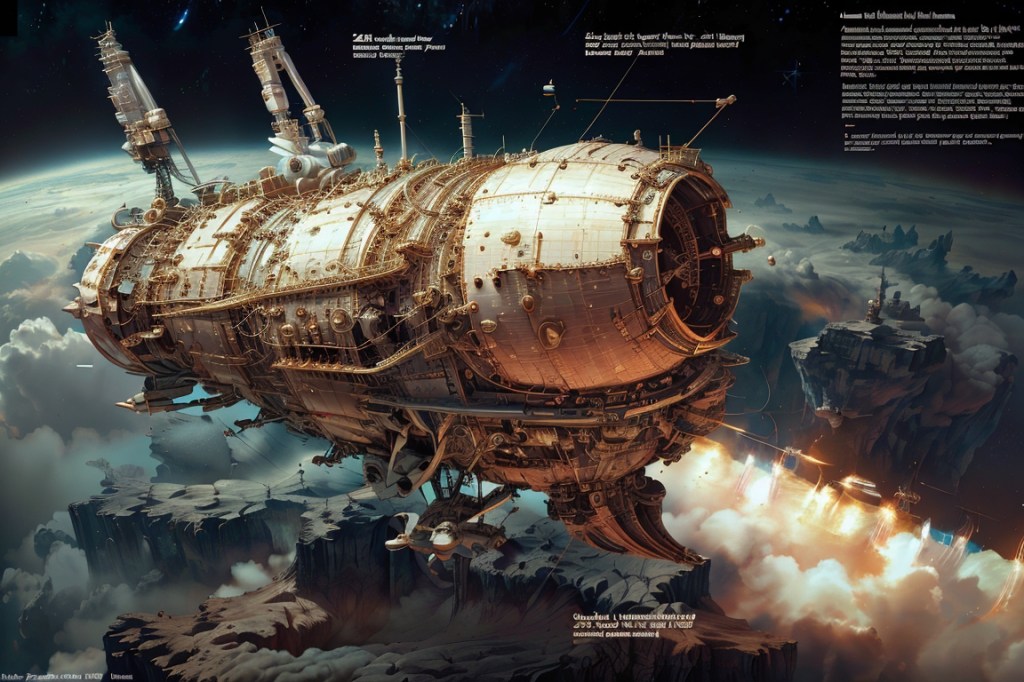
The USS Solarastrum is a colossal spacecraft that stands as a self-contained metropolis among the stars. With a crew capacity of 1,200 members, the vessel boasts cutting-edge sustainability features, including advanced recycling systems, lush green spaces, and state-of-the-art life support technologies. This engineering marvel will enable extended missions of up to 20 years to various planets within our solar system. The USS Solarastrum represents a new era in space exploration, fostering self-sufficiency and sustainability in the far reaches of the cosmos.

The USS Solarastrum is a colossal spacecraft that stands as a self-contained metropolis among the stars. With a crew capacity of 1,200 members, the vessel boasts cutting-edge sustainability features, including advanced recycling systems, lush green spaces, and state-of-the-art life support technologies. This engineering marvel will enable extended missions of up to 20 years to various planets within our solar system. The USS Solarastrum represents a new era in space exploration, fostering self-sufficiency and sustainability in the far reaches of the cosmos.

2. USS Stellarcity Odyssey

The USS Stellarcity Odyssey is a true marvel of engineering and innovation. This colossal spacecraft is designed to house and support a crew of 500 members on extended missions to the solar system's inner planets. Featuring advanced technology, state-of-the-art life support systems, and artificial gravity, it ensures the well-being and productivity of its inhabitants during missions that can span up to five years. The USS Stellarcity Odyssey exemplifies our commitment to pushing the boundaries of human achievement in space exploration.

The USS Stellarcity Odyssey is a true marvel of engineering and innovation. This colossal spacecraft is designed to house and support a crew of 500 members on extended missions to the solar system’s inner planets. Featuring advanced technology, state-of-the-art life support systems, and artificial gravity, it ensures the well-being and productivity of its inhabitants during missions that can span up to five years. The USS Stellarcity Odyssey exemplifies our commitment to pushing the boundaries of human achievement in space exploration.

3. USS AstraHaven

The USS AstraHaven, dubbed "Sanctuary among the Stars," is a colossal, state-of-the-art spacecraft with the primary mission of serving as a self-contained city in space. Capable of sustaining 1,000 people for a decade, it is positioned in a stable orbit around Mars and serves as a critical lifeboat and refuge for the thriving Martian colonies. In the face of catastrophic emergencies, the USS AstraHaven stands ready to ensure the safety and survival of humanity's expansion beyond Earth. The vessel maintains a crew of 10 on one-year rotations from Starfleet’s Mars Base 12.

The USS AstraHaven, dubbed “Sanctuary among the Stars,” is a colossal, state-of-the-art spacecraft with the primary mission of serving as a self-contained city in space. Capable of sustaining 1,000 people for a decade, it is positioned in a stable orbit around Mars and serves as a critical lifeboat and refuge for the thriving Martian colonies. In the face of catastrophic emergencies, the USS AstraHaven stands ready to ensure the safety and survival of humanity’s expansion beyond Earth. The vessel maintains a crew of 10 on one-year rotations from Starfleet’s Mars Base 12.

4. USS Asteria Harvestor

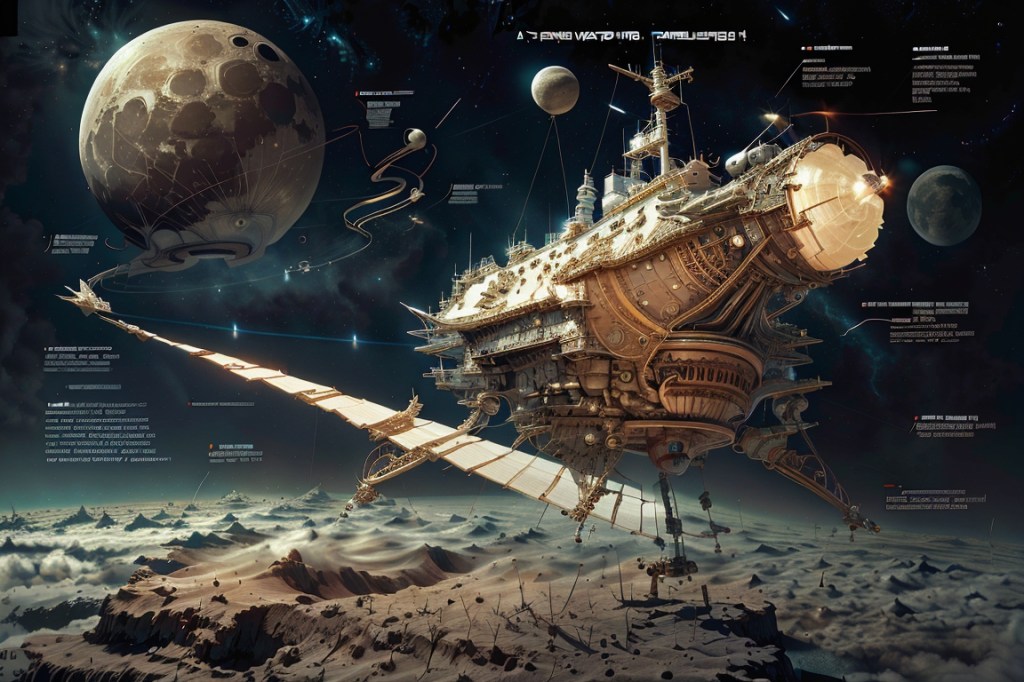
The USS Asteria Harvestor is a colossal, unmanned spacecraft engineered to capture and transport vast, ore-rich asteroids from the asteroid belt to lunar orbit for extensive mining operations. Equipped with cutting-edge technology and a robust design, the Asteria Harvestor represents the forefront of human ingenuity in space resource exploration. It promises to revolutionize our access to valuable resources and pave the way for sustainable space development.

The USS Asteria Harvestor is a colossal, unmanned spacecraft engineered to capture and transport vast, ore-rich asteroids from the asteroid belt to lunar orbit for extensive mining operations. Equipped with cutting-edge technology and a robust design, the Asteria Harvestor represents the forefront of human ingenuity in space resource exploration. It promises to revolutionize our access to valuable resources and pave the way for sustainable space development.

The missions of these four remarkable spacecrafts will commence in stages, beginning in January 2171. USS Starfleet Command is committed to advancing humanity’s presence in space and ensuring the safety and prosperity of our species as we embark on these bold new adventures.

For more information and updates on these groundbreaking missions, please visit our website at http://www.ussstarfleetcommand.space.

Media Contact:
Commander Sarah Mitchell
USS Starfleet Command
Phone: (415) 555-1234
Email: sarah.mitchell@starfleet.gov
###