New Earth City

In the crimson glow of the Martian dawn, New Earth City rose like a phoenix from the barren landscape. Nestled within the confines of an enormous transparent dome, the city stood as a testament to humanity’s audacity and ingenuity. It was a city unlike any other, an oasis of life on the dusty, alien planet.

In the crimson glow of the Martian dawn, New Earth City rose like a phoenix from the barren landscape. Nestled within the confines of an enormous transparent dome, the city stood as a testament to humanity's audacity and ingenuity. It was a city unlike any other, an oasis of life on the dusty, alien planet.

For years, scientists, engineers, and pioneers from every corner of Earth had collaborated on an audacious plan to terraform Mars. After decades of relentless effort, they had transformed the once lifeless, frigid wasteland into a world teeming with life. The Martian air had been thickened, the temperatures stabilized, and an artificial magnetic field had been created to protect the city from deadly solar radiation.

At the heart of this thriving metropolis was New Earth City, a genuinely international city-state. It was not beholden to the interests of any nation on Earth but governed itself as a self-sustaining ecosystem. Under the colossal dome, the city sprawled across the Martian landscape, divided into distinct districts that mirrored the diversity of Earth’s urban environments.

The Financial District gleamed with towering skyscrapers, housing the offices of multinational corporations, banks, and financial institutions. The Martian Stock Exchange, a hub of interplanetary commerce, buzzed with activity. People from all over Earth flocked here, seeking opportunities amidst the thriving interstellar economy.

In the Industrial District, the relentless hum of manufacturing plants and assembly lines filled the air. Advanced robotics and automation had made it possible to produce everything from spacecraft components to consumer goods with remarkable efficiency. New Earth City had become a beacon of technological progress, exporting its cutting-edge innovations to colonies across the solar system.

Nestled on the outskirts of the city was the Residential District, a tranquil haven where cozy houses with tidy fenced yards dotted the Martian landscape. Families from every corner of Earth had made New Earth City their home, drawn by the promise of a better life on Mars. Children played in lush parks, and dogs frolicked in the specially designed Martian dog parks, enjoying the thrill of bounding in the lower gravity.

Among the city’s residents, one figure stood out—a friendly android named Max and his robotic dog, Spark. Max had been built with a unique purpose—to assist and befriend the people of New Earth City. He walked among the humans, his artificial intelligence programming perfectly mimicking human emotions and behaviors. Max had a knack for making everyone feel at ease, and his compassion had endeared him to many.

his robotic dog, Spark. Max had been built with a unique purpose—to assist and befriend the people of New Earth City. He walked among the humans, his artificial intelligence programming perfectly mimicking human emotions and behaviors. Max had a knack for making everyone feel at ease, and his compassion had endeared him to many.

One day, as Max and Spark strolled through the tranquil Residential District, they came across a group of children playing with a holographic soccer ball. Max’s digital eyes twinkled with delight as he joined in the game, showcasing his exceptional agility and precision. The children laughed and cheered, embracing Max as one of their own.

As the sun dipped below the Martian horizon, Max and Spark continued their walk, spreading joy and companionship wherever they went. They were not just residents of New Earth City; they were its heart and soul, a testament to humanity’s ability to create new beginnings even in the most inhospitable of environments.

In New Earth City, amid the gleaming skyscrapers, the bustling factories, and the cozy homes, Max and Spark reminded everyone that the human spirit, even when crafted from circuits and wires, could shine brightly and foster a sense of community and belonging. They were living proof that on Mars, humanity had not just built a city; they had built a new world.


Into the Black Hole

Captain Amelia Grayson and Commander Ethan Hayes sat side by side in the cramped cockpit of the intergalactic spacecraft, their eyes fixated on the intricate control panel in front of them. The hum of the spacecraft’s engines filled the cabin as they hurtled through the inky void of space toward an object so mysterious and ominous that it had long been considered the final frontier of the universe—the event horizon of a black hole.

Captain Amelia Grayson and Commander Ethan Hayes sat side by side in the cramped cockpit of the intergalactic spacecraft, their eyes fixated on the intricate control panel in front of them. The hum of the spacecraft's engines filled the cabin as they hurtled through the inky void of space toward an object so mysterious and ominous that it had long been considered the final frontier of the universe—the event horizon of a black hole.

The two astronauts were pioneers on a mission that had captivated the imagination of every being in the galaxy. It was the first-ever attempt to learn what lay on the other side of a black hole, a venture that was equal parts daring and dangerous. They had trained for years mentally and physically for this moment, and now, the moment was upon them.

“Approaching event horizon in three minutes,” Captain Grayson announced, her voice steady despite the nerves that gripped her. She adjusted her grip on the control yoke, her gloved fingers tracing the sleek curves of the spacecraft’s interface.

Commander Hayes, his heart pounding in his chest, glanced at the small video screens that displayed vital telemetry data. The numbers danced and flickered, a testament to the colossal gravitational forces at play. “All systems are green, Captain,” he reported, his voice tinged with anticipation.

The spacecraft, aptly named “Stardiver,” glided ever closer to the swirling abyss of the black hole, its colossal maw seeming to devour the very essence of space and time itself. As they approached, the event horizon cast an eerie, distorted glow, bending and warping the starlight around it. It was as if the laws of physics themselves were being rewritten.

The minutes felt like an eternity as the spacecraft inched closer and closer to the point of no return. Captain Grayson and Commander Hayes held their breath, their suits filled with the sound of their own hearts thumping in their chests.

“Entering the event horizon now,” Captain Grayson declared, her voice tight with determination.

Time itself seemed to slow as the Stardiver crossed the threshold into the black hole, and the laws of physics seemed to unravel. Outside the cockpit, the stars stretched and bent in ways that defied explanation. It was as if they were witnessing the birth of a new reality.

Inside the cockpit, the control panel flickered and danced with erratic energy. The spacecraft’s instruments struggled to make sense of this strange new realm. The small video screens displayed images that were both awe-inspiring and terrifying—hypnotic swirls of light and color that defied comprehension.

Captain Grayson and Commander Hayes were lost in the surreal beauty of the unknown for what felt like an eternity. They had dared to tread where no one had gone before, and now they were on the cusp of discovering the secrets that lay on the other side of a black hole.

As they journeyed deeper into the enigmatic heart of the singularity, they realized they were no longer in control. The laws of physics, once their steadfast companions, had abandoned them. The spacecraft’s systems failed one by one, succumbing to the incomprehensible forces of the black hole.

In their final moments, as the cockpit disintegrated around them, Captain Grayson and Commander Hayes looked at each other, their expressions a mix of fear and wonder. They knew they might never return but had achieved what no one had ever dared to dream.

Their sacrifice would be remembered for eternity, a testament to the boundless human spirit and the insatiable thirst for knowledge that drove them to explore the edges of existence. As the black hole swallowed them, they held onto the hope that their journey would someday yield answers to the universe’s greatest mysteries, answers that would forever change humanity’s understanding of reality.

Storytelling with AI (Part II)

Part I explained some examples of the AI tools I use to create stories and accompanying art. It’s a disjointed process, as neither category of these AI tools can do both (yet). For text, you need to use a language model-based chatbot and for images, an art-generator app.

Language model-based chatbots are unique because they can write computer code, movie/video scripts, essays, blog and social media posts – and much more.

As a writer, I immediately saw the benefits of AI in my craft. For example, there was a short story I’d been working on (and then set aside) for years. I just couldn’t come up with an ending. I copied and pasted a summarized version into ChatGPT and asked it to “finish the story.” It did! And I was impressed.

The user interface of every AI generator I’ve used to date is rather underwhelming: A narrow Google-like text box. This suggests that concise prompts are encouraged – but I’ve used as many as 1,500 words for both ChatGPT (mainly for testing purposes). Hoolock limits entries to 1,000 characters, which is about 250 words.

ChatGPT

Hoolock

ChatGPT and Hoolock offer some suggestions to get started if you are new to these AI tools. But I use them a bit differently.

After work (and a cold beverage), I sometimes get an idea for a short story in my head that – without AI – I’d jot down for later consideration. But with AI at my fingertips, would it kill me to spend 30 seconds entering the idea into one of my two new creative tools? No!

This morning I wrote the following introduction to a fictional account of a fishing boat that was being overtaken by a storm:

The small fishing boat bobbed violently as the choppy waves kicked up by the hurricane continued to pummel the ship. Counter to his best efforts to outrun the tempest, the mighty storm was overtaking the two-man craft.

“Secure the nets, Mr. Schmitt!” Capt. Pauly shouted to his first mate. “We’ve no choice but to ride this out to the end!”

I titled it “Capt. Pauly’s Plight.” This is what a plugged into ChatGPT:

If you want to know how this tale ends, visit my blog – ChatGPT picked up where I left off here!

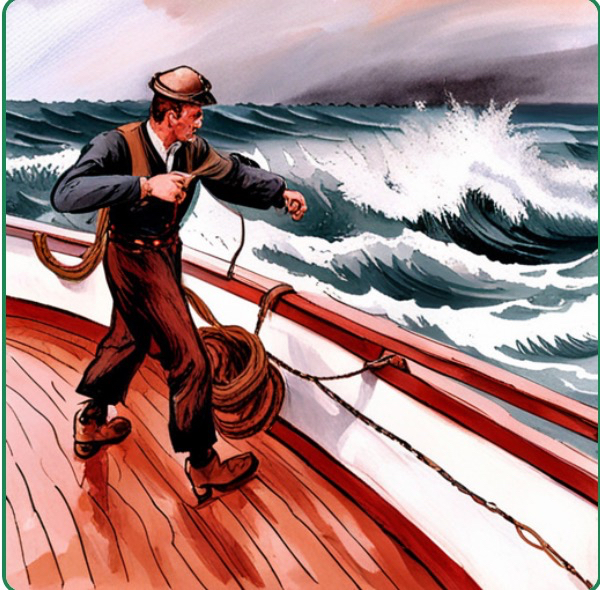
I then used what I had written along with a paragraph or two that ChatGPT contributed and pasted that text into Hoolock. Here’s the art that popped out the other end:

Hoolock-generated image of a fisherman on a boat

While I donated this piece to support “disaster relief,” I took a screen grab of just the image to use in my blog post. I took the liberty of doing so since I’m the author – but soon, the founders of Hoolock will make it possible to link the image back to their site for purchase considerations. It’s on the roadmap, they told me!

Storytelling with AI (Part I)

As a writer, I immediately saw the benefits of AI in my craft: for words, language model-based chatbots and for images, art-generator apps.

For words: Language model-based AI chatbots can carry out human-like conversations and write natural, fluid prose on various topics. They can also perform complex tasks, from writing programming code to planning your daughter’s wedding.

For art: An AI image generator uses machine learning called artificial neural networks that take your text input and turn it into an image.

I use both models for specific work-related projects: creating video scripts, creating succinct summaries of messy meeting transcripts, creating social media posts from blog posts, news releases and announcements – and many more.

Both AI tools have variations, but my favorites are ChatGPT (for the words) and Hoolock (for the art). There are paid options for some AI tools, but I’m happy with the free versions for now.

I like ChatGPT because, in my experience, it delivers superior results than the competition. And for art, I use Hoolock – not only because I like the results but also because it has brought out the “inner AI artist” in me.

Best of all, with Hoolock, I’m turning my words into very cool pieces of digital art that I can donate to a non-profit that can then sell the art to raise funds for the cause it represents.

How is that possible? Isn’t digital art just an image anyone can download? Yes, but in this case, that specific piece of purchased art resides on a downloadable non-fungible token (NFT) stored on a blockchain. A blockchain is a decentralized, distributed, public digital ledger that cannot be hacked. Think of a blockchain as the digital version of the bookkeeper’s infamous ledger in the movie “The Untouchables.”

Think of a blockchain as the digital version of the bookkeeper's infamous ledger in the movie “The Untouchables.”

Only the owner of the NFT can download it. Afterward, the NFT can be used on mugs, t-shirts, books, websites – anywhere and anyhow the owner wants to use it.

Read Part II of this post to learn some techniques I use to create AI-generated fiction and supporting artwork.

Capt. Pauly’s Plight

The small fishing boat bobbed violently as the choppy waves kicked up by the hurricane continued to pummel the ship. Counter to his best efforts to outrun the tempest, the mighty storm was overtaking the two-man craft.

“Secure the nets, Mr. Schmitt!” Capt. Pauly shouted to his first mate. “We’ve no choice but to ride this out to the end!”

“Secure the nets, Mr. Schmitt!” Capt. Pauly shouted to his first mate. “We’ve no choice but to ride this out to the end!”

Mr. Schmitt nodded, his face etched with worry as he scrambled to obey the captain’s orders. The wind howled and the rain stung like icy needles as he rushed to secure everything on deck. The hurricane had come upon them suddenly, like a vengeful sea monster rising from the depths.

As they battled the raging elements, the boat seemed to groan in protest as if it, too, feared the storm’s fury. Weathered and scarred from years of hard work on the open sea, the wooden vessel was now strained under the relentless assault of wind and waves.

Captain Pauly clung to the wheel in the tiny cabin with grim determination. His hands were calloused and robust, a testament to a lifetime spent at sea. He knew that trying to turn back now would be suicide; their only chance was to steer through the heart of the tempest and hope for the best.

Hours turned into an eternity as they fought to stay afloat. The storm was unrelenting, tossing them about like a child’s toy. Waves crashed over the deck. Fear gnawed at their hearts, but they held on, driven by the unshakable bond that forms between sailors in times of peril.

The small fishing boat bobbed and down violently as the choppy waves kicked up by the hurricane continued to pummel the ship. Counter to his best efforts to outrun the tempest, the mighty storm was overtaking the two-man craft.

Through the darkness and chaos, they could see other fishing boats, some much larger than their own, struggling to survive. Flashes of lightning illuminated the desperate faces of their fellow seafarers, a silent acknowledgment of their shared plight.

As dawn broke on the horizon, the storm began to relent as if satisfied with the punishment it had delivered. The wind gradually lost its fury, and the waves subsided. The exhausted first mate looked to the captain, who had guided them through the nightmarish ordeal.

“We’ve made it through, lad,” Captain Pauly said, his voice weary but filled with relief. “We’ve weathered the worst of it.”

Both men knew they had survived against all odds, a testament to their skill, courage, and the indomitable spirit of the sea.

In the days that followed, they made their way back to the safety of the harbor. The small fishing boat, battered but still afloat, returned as a symbol of resilience and determination. Captain Pauly and his first mate would forever be known as the brave sailors who faced the hurricane’s full fury and lived to tell the tale, a story that would be told and retold among the fishermen of the coastal town for generations to come.

The Billionaire’s Lighthouse

Once upon a time in the picturesque coastal town of Shorehaven, renowned master architect John Ellis faced one of the most challenging projects of his illustrious career. His client was none other than the billionaire real estate developer, Hugh Shipley, a man known for his discerning taste and exacting standards.

Once upon a time in the picturesque coastal town of Shorehaven, renowned master architect John Ellis faced one of the most challenging projects of his illustrious career. His client was none other than the billionaire real estate developer, Hugh Shipley, a man known for his discerning taste and exacting standards.

Once upon a time in the picturesque coastal town of Shorehaven, renowned master architect John Ellis faced one of the most challenging projects of his illustrious career. His client was none other than the billionaire real estate developer, Hugh Shipley, a man known for his discerning taste and exacting standards.

Shorehaven had always been a haven for sailors and fishermen, but Hugh Shipley had a vision that surpassed the town’s humble origins. He wanted to create a landmark that would not only guide ships safely through treacherous waters but also stand as a testament to his wealth and influence. And he had chosen John Ellis to make his vision a reality.

Ellis knew from the very beginning that Shipley’s demands would push the boundaries of architectural imagination. The billionaire was adamant about an eight-story lighthouse, a structure that dwarfed any other lighthouse in the world. He wanted it to be a symbol of his success, visible from miles out at sea.

As John Ellis delved into the project, he found himself navigating a sea of challenges. The lighthouse had to be not just tall, but also incredibly sturdy to withstand the harsh coastal weather. It had to incorporate state-of-the-art lighting technology to guide ships safely, and it needed to have a design that was both functional and aesthetically pleasing.

For months, John worked tirelessly, pouring over blueprints, conducting feasibility studies, and consulting with experts from various fields. He tested multiple architectural concepts, pushing the boundaries of engineering and design. The process was grueling, and there were moments when he doubted whether he could meet Shipley’s demanding specifications.

But John Ellis was not called a master architect for nothing. His passion for architecture, his dedication to perfection, and his unwavering commitment to his craft drove him forward. He put in long nights and early mornings, refining the plans until they were nothing short of a masterpiece.

Finally, the day came when John Ellis presented his final plans to Hugh Shipley. The billionaire sat in his opulent office overlooking the tranquil waters of Shorehaven Bay, examining the blueprints with a critical eye. John held his breath, his heart pounding in anticipation.

After what felt like an eternity, Shipley looked up from the plans and smiled. It was a smile of approval, a smile that meant success. He nodded, his eyes shining with satisfaction.

“Ellis, you’ve outdone yourself,” Shipley said. “This is magnificent. It’s everything I envisioned and more.”

Relief washed over John like a tidal wave. He had not only met Shipley’s demanding expectations, but he had exceeded them. The grand eight-story lighthouse was a masterpiece of architectural innovation, blending form and function seamlessly.

With a handshake and a contract signed, the construction of the lighthouse was set to commence in the coming spring. The town of Shorehaven buzzed with excitement as the news spread. John Ellis had not only created a symbol of maritime safety but had also left an indelible mark on the town’s history.

As the construction crews began their work, the towering lighthouse rose steadily, a testament to the collaboration between a demanding client and a master architect who had risen to the challenge. It would soon stand as a beacon of hope and a symbol of achievement, guiding ships safely home while reminding everyone that, with dedication and vision, even the most ambitious dreams could become a reality.

Destination: Europa

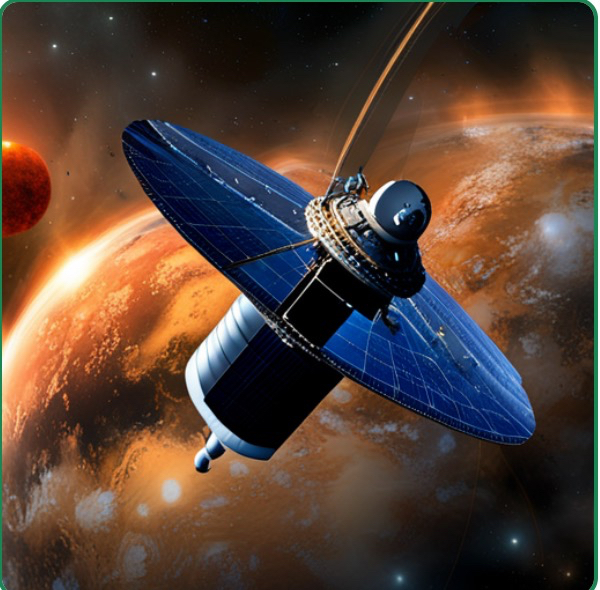
As the U.S.S. Broderbund glided through the vast expanse of space, the bridge lights dimmed, and a sense of tranquility filled the room. Captain Griggs and the five bridge officers made their way to the cryostasis pods positioned in a semi-circle at the back of the control room. These pods were state-of-the-art technology, ensuring the safety and well-being of the crew during their extended journey.

As the USS Broderbund glided through the vast expanse of space, the bridge lights dimmed, and a sense of tranquility filled the room. Captain Griggs and the five bridge officers made their way to the cryostasis pods positioned in a semi-circle at the back of the control room. These pods were state-of-the-art technology, ensuring the safety and well-being of the crew during their extended journey.

One by one, the officers entered their pods. The process was familiar, but the anticipation was always tinged with a hint of anxiety. As they settled into their chambers, Captain Griggs looked around at the dedicated team that had become like family over the years. Their commitment to this mission, to humanity’s exploration of the solar system, was unwavering.

With a nod of assurance, Captain Griggs stepped into his cryostasis pod. He felt a momentary chill as the pod’s lid sealed shut, locking him in a cocoon of preservation. The ship’s AI, known as “AURA,” took over the final preparations, ensuring all systems were “GO” for the long journey ahead.

In the darkness of their pods, the crew members could feel the gentle hum of the ship’s engines and the soothing sound of AURA’s voice, providing a final update before initiating the cryogenic process.

“Preparing for stasis. All systems nominal. Cryogenic suspension sequence initiated. Sweet dreams, Captain Griggs and crew.”

As the crew drifted into their deep slumber, the Broderbund continued its trajectory toward Europa. Over the next three years, the ship would sail through the cosmic ocean, silently and tirelessly, until it reached its destination. AURA, the ever-watchful guardian of the vessel, monitored every system, ensuring that the crew would awaken safely when the time was right.

During their journey, the crew members dreamed of the adventures that awaited them on Europa, of the mysteries they would uncover beneath its icy surface and the contributions they would make to the future of interplanetary exploration. They knew this mission was a testament to human ambition and the unyielding spirit of discovery.

And so, in the vastness of space, the U.S.S. Broderbund and its crew sailed onward, a beacon of human determination, with the promise of a new world awaiting them on the icy moon of Europa.

Murder in Akihabara

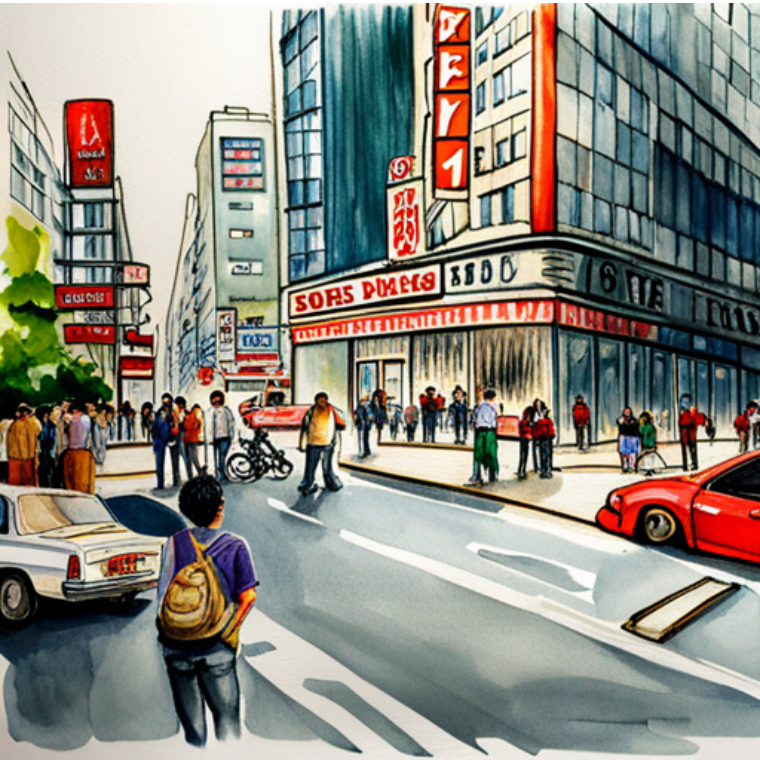
Jas Doyle had always been fascinated by Tokyo’s Akihabara district. Known as “Electric Town,” it was a kaleidoscope of neon lights and a cacophony of electronics, a sensory overload for anyone walking its streets. For a tech-savvy American journalist like Jas, it was a paradise.

Jas Doyle had always been fascinated by Tokyo's Akihabara district. Known as "Electric Town," it was a kaleidoscope of neon lights and a cacophony of electronics, a sensory overload for anyone walking its streets. For a tech-savvy American journalist like Jas, it was a paradise.

Jas was in Tokyo on an assignment for an international tech magazine, covering the latest innovations in Japanese gaming and electronics. He was right at home among the otaku, the diehard fans of anime, manga, and video games. Jas had always respected their passion for the medium, and he knew that the otaku of Akihabara were the lifeblood of the district.

One evening, as the sun dipped below the horizon, casting a purplish hue over the bustling streets, Jas found himself in the heart of Akihabara. He was chatting with a group of otaku who were explaining the intricate details of the latest virtual reality headset when the atmosphere suddenly changed. An eerie silence swept through the crowd, and the neon lights seemed to flicker in unison.

Jas’s instincts kicked in, and he turned toward the source of the commotion. At the entrance to a narrow alleyway, he saw a group of well-dressed men in black suits. Even in the dim light, their tattooed arms and menacing presence were unmistakable – members of the Yakuza.

The otaku around him began to disperse, their enthusiasm for tech overshadowed by fear. Jas knew he had to document what was happening; it was his journalistic duty. He discreetly took out his smartphone and began recording, making sure to stay behind a corner, partially hidden from view.

In the alleyway, a heated argument was unfolding between two Yakuza members. Jas strained to hear their words over the ambient noise. It became apparent that this was no ordinary dispute. It was a power struggle within the Yakuza, and tensions were running high.

Suddenly, one of the Yakuza members drew a concealed knife from his suit. Before anyone could react, he lunged at his rival with deadly precision. Blood sprayed across the narrow alley, and a collective gasp rippled through the onlookers. The victim fell to the ground, lifeless.

Jas’s heart raced as he continued to capture the grim scene on his phone. He knew he had to get the footage out to the world, but he also had to stay hidden from the dangerous men now cleaning their blades in the alley.

As the assailant turned to leave, he glanced in Jas’s direction. Panic gripped Jas as their eyes met briefly. He knew he had to act quickly. He backed away, slipped behind a stack of electronics crates, and then made a dash for the nearest exit, praying he wouldn’t be noticed.

Once back on the bustling streets of Akihabara, Jas called the police, providing them with the footage he had captured. He had a duty to the truth, and this violent assassination must be exposed. But he also knew that he had put himself in grave danger.

The following days were tense as Jas cooperated with the Japanese authorities, who were able to identify and apprehend the Yakuza member responsible for the murder. The incident sent shockwaves through Tokyo, putting Akihabara’s vibrant community on edge. But it also underscored the importance of truth and justice, even in dangerous circumstances.

Jas Doyle’s reporting made headlines worldwide, shedding light on the dark underbelly of Tokyo’s criminal underworld. He had ventured into Akihabara as a curious journalist. He emerged as a witness to a violent crime, a testament to the power of a free press and the determination to reveal the truth, no matter the risks.

The Balloonist

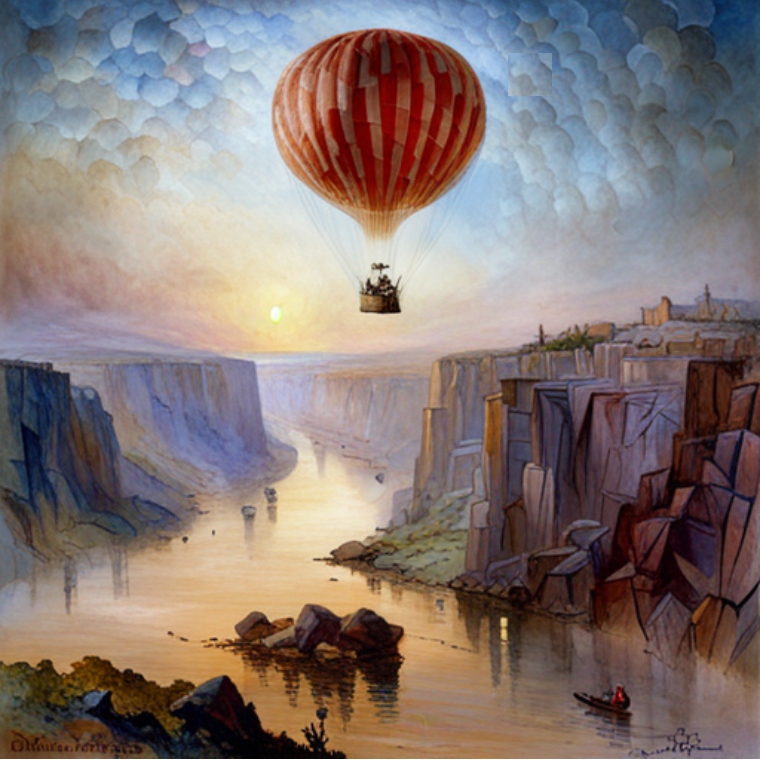
The date was July 7, 1897. Adventurer Bacchus S. Hensley, clad in a weathered leather jacket and a well-worn fedora, climbed into a wicker gondola suspended beneath a vast, red-and-white balloon dubbed the “Coureur du Vent.” He had spent months preparing for this moment, and as he stood in the gondola, the anticipation bubbled within him like the fizz in a freshly popped champagne bottle.

The sun bathed the countryside in a warm, golden glow, and the winds were minimal, barely rustling the leaves on the trees. It was the perfect weather for the balloon’s maiden voyage, and Bacchus felt excitement and nervousness as he glanced at the two companions joining him on this historic journey.

Thomas Taylor, a newspaperman with a perpetually inquisitive look in his eyes, adjusted his wire-rimmed glasses and grinned. He held a pen and notepad, ready to record every detail of their adventure. “This will be quite the story, Bacchus,” he said, his voice filled with eagerness.

John Tetley, the weather scientist, peered out over the edge of the gondola, studying the atmosphere with a focused intensity. He had charts and instruments laid out meticulously before him, ready to collect valuable data during their ascent. “Our journey will provide invaluable insights into the upper atmosphere, Bacchus. The world has yet to see what we’re about to witness.”

Bacchus nodded, a blend of excitement and determination in his eyes. He had always been drawn to the unknown, the uncharted territories beyond the horizon. The Coureur du Vent was his vessel to explore the skies, and he was determined to push the boundaries of human exploration.

With a final check of the ropes and a nod to the ground crew, Bacchus signaled for the balloon to be released. The massive balloon stretched and strained, tugging against its tethers, until finally, it ascended gracefully into the clear blue sky. The trio in the gondola watched in awe as the world below grew smaller and smaller.

As they ascended, Bacchus marveled at the serene beauty of the world from this unique vantage point. The landscape below unfolded like a patchwork quilt, with rolling hills, winding rivers, and quaint villages. It was a view few had ever witnessed, and Bacchus couldn’t help but feel a profound sense of freedom and adventure.

Hours turned into days as they drifted higher and higher into the sky. John Tetley meticulously recorded data about temperature, humidity, and atmospheric pressure. Thomas Taylor wrote vivid descriptions of the landscape and the unique perspective from their aerial vantage point. For his part, Bacchus marveled at the ever-changing canvas of clouds and colors surrounding them.

But as they ventured deeper into the uncharted skies, they encountered challenges they had never anticipated. Thunderclouds loomed on the horizon, their dark, towering forms a stark contrast to the tranquil blue sky. Lightning crackled ominously, and the winds picked up, tossing the gondola about like a leaf in a tempest.

Fear gripped them, but Bacchus refused to let it paralyze him. With determination in his eyes, he skillfully navigated the balloon through the roiling clouds and turbulent air. It was a harrowing experience, but they emerged on the other side, their battered but resilient balloon still intact.

Days turned into weeks, and their journey took them across vast expanses of land and sea. They encountered breathtaking sunsets and awe-inspiring storms. They even spotted distant lightning illuminating the night sky in electric blue and violet hues.

Their adventure became a sensation back on the ground, with newspapers worldwide reporting on the daring trio’s journey into the unknown. People marveled at the photographs and stories brought back by Thomas Taylor, and scientists eagerly analyzed the data collected by John Tetley.

Finally, after what felt like a lifetime, the Coureur du Vent descended gently back to Earth. They landed in a remote field, greeted by a cheering crowd of well-wishers and reporters. Bacchus, Thomas, and John had become legends, pushing the boundaries of human exploration and knowledge.

As Bacchus climbed out of the gondola, he knew their journey had been more than an adventure. It was a testament to the indomitable spirit of exploration and the enduring human desire to reach the skies. With the world at their feet and the heavens above, they had become balloonists who dared to dream beyond the horizon.

The Colorado Wilderness

Journal Entry #57
April 21, 1838
The Colorado Wilderness
By Johann Diederich, Naturalist

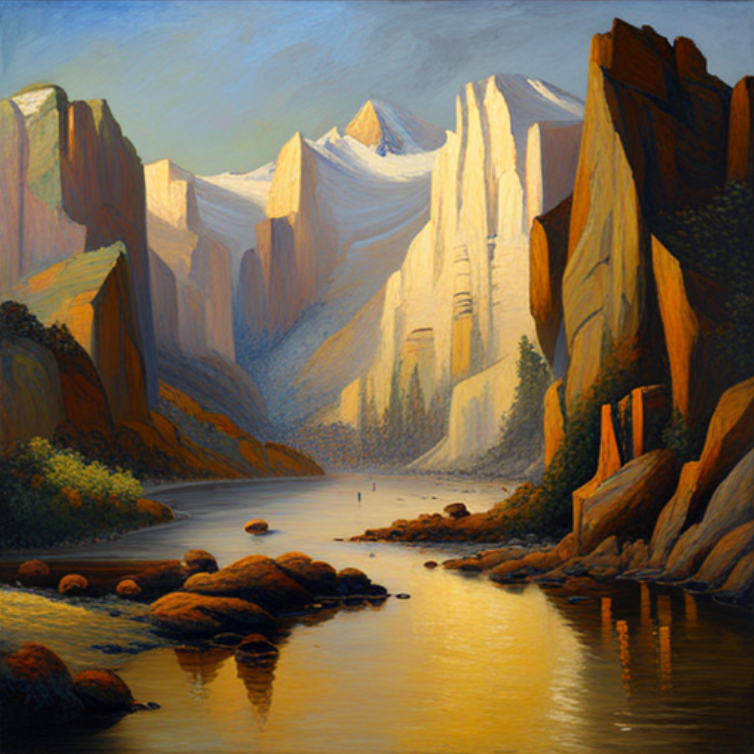
Today, I stand at the threshold of a world untouched by human hands, a hidden sanctuary of nature’s grandeur that has remained concealed for centuries. With a heart filled with awe and wonder, I put pen to paper to document the breathtaking discovery of a pristine canyon, cradling a river of unparalleled beauty.

As the first rays of dawn kissed the towering peaks that surrounded me, I embarked on an expedition more profound into the heart of the Colorado wilderness, led by an inexplicable urge to explore the uncharted. What lay before me was a world that stirred my senses and transported me to a realm of unspoiled wilderness.

The verdant forest gradually gave way to a rugged terrain marked by boulders and craggy outcrops before I stumbled upon the canyon’s edge. The sight that met my eyes was nothing short of sublime. A vast chasm, its walls sheer and towering, their shades of red and orange carved by eons of erosion, surrounded me. The river, a ribbon of crystal-clear water, meandered sinuously through the canyon’s depths, glistening like liquid sapphire under the morning sun.

The silence that enveloped this place was profound, broken only by the gentle murmur of the river as it danced over smooth pebbles and polished rocks. The air was filled with a symphony of bird calls, and the canyon walls seemed to echo their melodic tunes as if the ethereal beauty of this place enchanted the very rocks themselves.

I descended into the canyon cautiously, my heart pounding with every inch closer to the river’s edge. The water, so pristine and clear, revealed myriad aquatic life, from darting trout to the elegant, gliding form of crayfish. The riverbed, lined with moss-covered stones and delicate aquatic plants, felt like a paradise untouched by time.

Each twist and turn of the canyon revealed a new wonder. The walls bore testament to the passage of millennia, with intricate patterns etched by wind and water, their surfaces hosting a tapestry of life in the form of mosses, ferns, and even the occasional wildflower. The biodiversity here is astonishing, with a profusion of flora and fauna that I have never encountered before as a naturalist.

As the day wears on, I find myself humbled by the sheer majesty of this untouched wilderness. I am acutely aware that I stand at the intersection of discovery and preservation, and my duty as a naturalist is clear. This canyon, this sanctuary, must remain unspoiled for future generations to cherish as I have today.

I shall dedicate the coming days to meticulously documenting the flora and fauna of this pristine canyon, to ensure that its beauty and ecological significance are understood and respected. In doing so, I hope to play my part in the broader effort to conserve and protect these untouched realms of nature for all time.

With profound gratitude and an unwavering sense of purpose, I conclude this entry, eager to embrace the mysteries that this untamed wilderness continues to unveil.

– Johann Diederich, Naturalist