In the dimly lit study of a stately Georgetown mansion, John F. Kennedy sat across from a spectral figure that history had refused to release from its grip. Franklin D. Roosevelt, the 32nd President of the United States, gazed at Kennedy with an air of wisdom that transcended the boundaries of time. In this fictional scenario, the two leaders had been summoned from the annals of the past to discuss the urgent issue at hand: the human rights violations in the occupied regions of Ukraine resulting from Russia’s invasion in the present day.
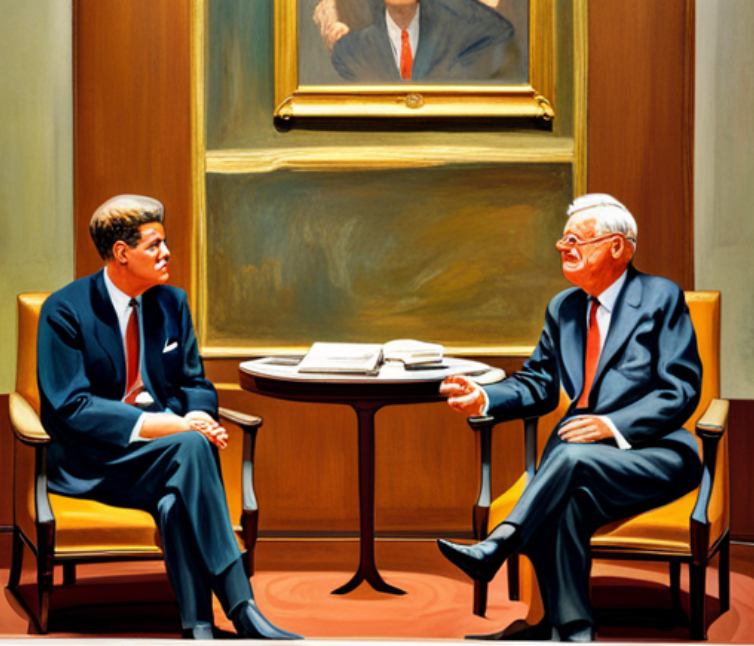
Kennedy cleared his throat, his voice resonating with a hint of reverence, “Mr. Roosevelt, it is an honor to be in your presence, even under such extraordinary circumstances.”
Roosevelt’s eyes twinkled with gravitas and warmth, “The honor is mine, young John. We’ve both faced our fair share of crises in our time, haven’t we?”
Kennedy nodded solemnly, acknowledging the parallels between their eras. “Yes, and the situation in Ukraine today is dire. We face a grave threat to human rights and international stability.”
Roosevelt leaned forward, his chair creaking softly. “Tell me, John, what troubles you about this conflict?”
Kennedy recounted the harrowing tales of displacement, persecution, and suffering in Ukraine. “The people of Ukraine are enduring a modern-day tragedy, Mr. Roosevelt. Innocent civilians are subjected to forced displacement, violence, and deprivation of necessities. Their cries for help echo worldwide, and we must heed their call.”
Roosevelt nodded thoughtfully, his fingers intertwined. “You know, John, during my presidency, I was confronted with a similar situation in Europe. The world faced the brutality of Nazi aggression. We couldn’t turn a blind eye then and mustn’t now.”
Kennedy recognized the gravity of Roosevelt’s words and the legacy he carried. “You’re right, Mr. Roosevelt. We must stand together, just as our nations did in the past, to protect the rights and dignity of the Ukrainian people.”
Roosevelt’s eyes, though aged, sparkled with resilience. “The United Nations, NATO, and the international community must unite to address this crisis. We must exert diplomatic pressure, offer humanitarian aid, and provide a sanctuary for those fleeing the violence.”
As the discussion continued, Kennedy and Roosevelt spoke of the need for diplomatic negotiations, sanctions, and a collective response to deter further human rights violations. They stressed the importance of upholding the principles of democracy and freedom in the face of aggression.
As the meeting concluded, Kennedy extended his hand to the elder statesman. “Thank you, Mr. Roosevelt. Your wisdom has been a guiding light in these troubling times.”
Roosevelt clasped Kennedy’s hand with a firm grip. “Remember, John, leadership is tested in times of adversity. We must continue championing the cause of justice and human rights, just as we did in our eras.”
With a nod of mutual understanding, Kennedy watched as Roosevelt’s figure slowly faded, returning to the annals of history. Moments later, his figure followed suit, and the room was once again empty.









 The Diederich Journal