The Prisoner

Erinn Springer had always been an adventurous soul. She thrived on challenges and had explored every corner of the world. But on that fateful night, she awoke inside her worst nightmare, trapped in a place she couldn’t recognize. Darkness enveloped her, and the air was thick with an eerie silence.

Panic surged through Erinn as she realized she was imprisoned in this nightmarish realm, her limbs bound by unseen forces. Her first instinct was to scream, but no sound escaped her lips. She was silenced, left alone with her fear and confusion.

As her eyes adjusted to the dim surroundings, Erinn saw faint glimmers of light dancing in the distance. Gathering her courage, she began to crawl toward them, her heart pounding in her chest. The glimmers grew brighter, revealing themselves as a series of floating keys, each radiating a soft, otherworldly glow.

The keys seemed to beckon to her, and Erinn knew instinctively that they held the key to her escape from this surreal prison. With a determined spirit, she started collecting them one by one, her fingers tingling with a strange energy as she touched each key. As she gathered more of them, a sense of empowerment washed over her.

The keys, it seemed, were her only allies in this place. But they were not enough. Erinn needed clues to navigate this twisted labyrinth and unlock the door to the waking world. She strained her mind, trying to remember how she had ended up here, but the memory was elusive, slipping away like water through her fingers.

Time lost all meaning in the prison, but Erinn pressed on, driven by an indomitable will to escape. Each key she collected opened up new passages and unveiled cryptic messages etched into the walls. They were riddles, challenges meant to test her intellect and determination.

With every puzzle solved, Erinn felt herself growing stronger, more attuned to the strange magic of the place. She discovered that the keys weren’t just ordinary objects; they had the power to manipulate the very fabric of her surroundings. Walls shifted, pathways opened, and illusions were shattered as she progressed deeper into the maze.

In her journey, Erinn encountered beings from her past, spectral echoes of people she had met in her adventures. Some were helpful, offering cryptic advice or guidance, while others tried to hinder her progress, their intentions shrouded in shadows. But Erinn pressed forward, trusting her instincts and the magic of the keys.

As the days turned into weeks, Erinn finally deciphered the last riddle and collected the final key. With a newfound confidence, she retraced her steps through the labyrinth, heading toward the massive, ornate door that had taunted her from the beginning.

Using the collected keys, Erinn worked her magic, and the door slowly creaked open. A blinding light spilled from the other side, overwhelming her senses. She shielded her eyes, stepping hesitantly into the doorway.

Erinn emerged from the prison, back into the waking world. The nightmare had released its grip on her, and she breathed in the sweet, fresh air of freedom. She had conquered her worst nightmare through wit, determination, and the magic of the keys.

With newfound wisdom and strength, Erinn Springer knew that no challenge, no matter how daunting, could ever truly imprison her. She was a survivor, an adventurer, and she would continue to seek out new horizons, knowing that she could overcome anything that stood in her way.

The Vacation House

In 1965, the Tauber family’s lake-front vacation home was a refuge from the hustle and bustle of city life. They spent at least one weekend a month there — all year round. Nestled between tall pine trees and overlooking the serene, glistening lake, the charming cottage had become their second home. It had witnessed countless family gatherings, laughter, and the growth of their family over the years.

For three generations, the Tauber family had maintained this tradition. It all began with Max Tauber, who had purchased the house as an escape from his demanding job as a lawyer. Max and his wife, Clara, fell in love with the peacefulness of the place and the sense of togetherness it provided. They made cherished memories, raising their children, Sarah and Daniel, in the idyllic lakeside retreat.

As the years went by, the Tauber children grew up, got married, and had children of their own. The vacation house became the backdrop for family reunions, where grandparents, parents, aunts, uncles, and cousins gathered to strengthen their bonds and create new memories.

In 1965, the tradition continued as Sarah and Daniel, now adults themselves, took over the responsibility of maintaining the vacation home. They had their own families now, and it was important for them to instill the same love for the lake and the peaceful haven it offered in their children.

The vacation house stood as a testament to their enduring family ties. Each season brought a unique charm to the place. Spring blossomed with vibrant wildflowers, and the lake thawed, welcoming the return of birds and the soothing sound of lapping water. Summer brought joyous splashes in the lake, BBQs, and nights filled with starry skies and campfires. Autumn painted the trees in a riot of colors, and the smell of bonfires and toasted marshmallows filled the air. Even winter held its own magic as the lake froze over, providing opportunities for ice skating and hot chocolate by the fireplace.

Over the years, the Tauber family shared their vacation house with friends and acquaintances who needed a respite from their busy lives. The house became a sanctuary not just for the Taubers but for all who visited, a place where troubles seemed to melt away, and time moved at a slower, more meaningful pace.

As the decades passed, the Tauber family faced the challenges of life with grace. There were births, weddings, and, inevitably, losses. The vacation house remained a constant source of solace and strength during these times, a place where they could remember and celebrate the lives of those who had left them but were never truly gone.

In 2015, the Tauber family gathered at the vacation house to celebrate its 50th anniversary as part of their family. Now in its third generation, the family had grown even larger, and the house had expanded to accommodate the growing number of loved ones. It was a weekend filled with joy, nostalgia, and reflection, a testament to the enduring legacy of Max and Clara’s decision to buy this lake-front retreat.

As the sun set over the lake on that memorable evening, the Tauber family gathered on the porch, looking out at the same view that had captivated their hearts half a century ago. They knew that the vacation house would continue to be a place of love, laughter, and cherished memories for generations to come—a place where family bonds were forged, and the beauty of life’s simple pleasures was truly appreciated.

Just a cop… on the Moon

Officer Takizawa sighed heavily as he sat in the dimly lit police headquarters of the International Moon Base. The harsh fluorescent lights overhead did little to alleviate the sense of fatigue that had settled over him after another long and grueling shift. The crime rates on the moon had skyrocketed ever since the illegal introduction of the highly addictive pleasure narcotic known as Nuke, and it was taking a toll on everyone.

He stared at the blank screen of his computer for a moment, his fingers poised over the keyboard. The report he was about to complete was just another in a seemingly endless series of arrests related to Nuke. The drug had torn through the moon base like wildfire, turning once-peaceful neighborhoods into war zones and leaving families torn apart by addiction and despair.

Takizawa had been a cop on the moon for years, and he had seen it all – from petty thefts to violent assaults. But Nuke was something else entirely. It was a menace that seemed impossible to eradicate, its dealers always one step ahead of the law. The drug was manufactured in hidden labs, and its distribution networks were as complex as they were elusive.

As he began typing out the arrest report, Takizawa couldn’t help but think about the person he had just apprehended – a young man with hollow eyes and track marks on his arms. It was a familiar sight, one that had become all too common. The young man had been caught with a stash of Nuke, and he had put up a desperate struggle when the officers tried to arrest him. Takizawa couldn’t help but wonder what had driven this once-promising individual to the depths of addiction.

The report detailed the events of the arrest, the evidence seized, and the charges filed. Takizawa knew that the legal process was just one small part of the battle against Nuke. It would take a concerted effort from law enforcement, the medical community, and society as a whole to tackle the root causes of addiction and to dismantle the drug’s infrastructure.

As he finished the report, Takizawa felt a mix of frustration and determination. He knew that he and his fellow officers were fighting an uphill battle, but they couldn’t afford to give up. The moon base was a symbol of human progress, a testament to what humanity could achieve when working together. Nuke threatened to undermine all of that.

With a final click of the keyboard, Officer Takizawa submitted the arrest report. It was a small victory in a much larger war, but it was a victory nonetheless. He leaned back in his chair, his mind filled with thoughts of what lay ahead. The battle against Nuke was far from over, but he was determined to keep fighting, for the sake of the moon base and all those who called it home.

The Captain

With the crew gone, the captain plots a course back to Earth.

With the crew gone, Captain Linda Cortez found herself alone on the bridge of the starship “Voyager’s Destiny.” It had been a grueling journey through uncharted space, filled with danger and uncertainty. She had watched as one by one, her loyal crew members succumbed to a mysterious illness that had swept through the ship. It was a cruel and relentless adversary that defied all attempts at treatment.

Linda had done everything in her power to save her crew. She had consulted the ship’s medical database, reached out to other starships in the vicinity, and even sent distress signals into the void of space, hoping that someone, anyone, would come to their aid. But there had been no response, no sign of help on the horizon.

Now, with the crew gone, she felt a deep sense of responsibility weighing on her shoulders. She knew that she couldn’t abandon the ship and its valuable cargo. The “Voyager’s Destiny” was carrying a cargo of advanced alien technology that could revolutionize Earth’s scientific knowledge and technological capabilities. It was her duty to ensure that it reached Earth safely.

Linda plotted a course back to Earth, her fingers dancing across the holographic interface on the command console. The stars on the viewscreen shifted and realigned as the ship’s computer calculated the trajectory. It would be a long and lonely journey, spanning countless light-years and fraught with its own set of dangers, but she was determined to see it through.

As the ship’s engines roared to life, Linda couldn’t help but reflect on the crew she had lost. They had been more than just colleagues; they had been her friends, her family. Each empty chair in the bridge seemed to echo with their absence. She couldn’t afford to dwell on the grief, not now. She had a mission to complete.

Days turned into weeks as Captain Linda Cortez piloted the “Voyager’s Destiny” through the cosmos. She spent her days studying the alien technology, hoping to gain insights that might save Earth from future threats. Nights were spent alone, staring out at the endless expanse of space, wondering if anyone would ever know the sacrifices her crew had made.

One day, as she was analyzing the alien data, Linda made a breakthrough. She discovered a way to modify the ship’s warp drive, making it more efficient and faster. It was a risky modification, but it could significantly shorten their journey home. With no crew to consult, Linda made the decision herself. She initiated the adjustments, and the ship surged forward at incredible speeds.

Weeks turned into days, and Earth’s familiar blue orb came into view. Linda couldn’t believe her eyes. She had done it. She had brought the “Voyager’s Destiny” and its precious cargo back to their home planet.

As she entered Earth’s orbit, Linda sent a transmission to Starfleet Command, informing them of the situation and requesting assistance with the containment and study of the alien technology. A fleet of starships soon arrived, along with medical teams to examine Linda and ensure she was free from the mysterious illness that had plagued her crew.

Linda stood on the bridge of the “Voyager’s Destiny” as Starfleet personnel boarded the ship. She knew that her journey was far from over, and there would be questions and investigations to face. But she had fulfilled her duty as a captain, ensuring that Earth’s future was secured.

In the end, Captain Linda Cortez had proven that even in the darkest of times, with determination and a sense of duty, one person could make a difference. And as she looked out at the planet she had returned to, she felt a glimmer of hope for a brighter future, not just for herself, but for all of humanity.

The Time Machine

Having been lost in time for months, the crew found themselves in a predicament beyond their wildest imagination. Stranded in an era far removed from their own, they were adrift in a temporal sea, struggling to comprehend the tides of history that had swept them away. Their once state-of-the-art spacecraft now seemed like a relic in this unfamiliar period.

Desperation had driven them to search for a way back home, and with each passing day, their hope flickered like a dying star. But amidst the uncertainty and despair, one crew member, Dr. Elena Ramirez, refused to surrender to the abyss of the unknown. She had always been the brilliant mind behind their navigational systems, and her unyielding determination had brought them this far.

Huddled together in the dimly lit control room, the crew anxiously awaited Dr. Ramirez’s calculations. The room was filled with the hum of computers, the soft glow of screens casting an ethereal light on their tense faces. Her eyes bloodshot from countless sleepless nights, Dr. Ramirez finally looked up from her calculations with a mixture of exhaustion and excitement.

“I believe I’ve found a way to map the temporal anomalies surrounding us,” she announced, her voice quivering with anticipation. “By analyzing the shifts in the time-space continuum and cross-referencing historical data from this era, I’ve identified a series of gravitational anomalies that might lead us back home.”

The crew members exchanged glances, a renewed hope coursing through their veins. They crowded around Dr. Ramirez, studying the charts and data she had painstakingly compiled. It was a complex and intricate puzzle, one that would require precision and coordination.

“We’ll need to recalibrate the ship’s systems to generate a localized temporal field,” Dr. Ramirez explained. “This should counteract the effects of the anomalies and create a stable pathway through time.”

The crew worked tirelessly, adjusting the spacecraft’s systems based on Dr. Ramirez’s calculations. Every line of code, every adjustment to the ship’s hardware, was executed with unwavering determination. As they toiled away, the ship’s surroundings seemed to respond to their efforts – the gravitational anomalies shifted, almost as if the universe recognized their struggle.

Finally, the moment of truth arrived. The crew gathered around the control room, their fingers hovering over the buttons that would initiate the temporal jump. Dr. Ramirez’s hands trembled slightly, a mixture of anxiety and hope in her eyes.

“Here goes nothing,” she murmured, her voice a blend of determination and trepidation.

With a decisive button press, the ship’s systems whirred to life. The crew felt a jolt as the temporal field enveloped them, like being caught in a gentle vortex. Outside the windows, the fabric of time seemed to bend and twist like a cosmic river guiding them forward.

Minutes felt like hours as the crew held their breath, watching the swirling vortex of time gradually settle. And then, as abruptly as it had begun, the ship shuddered to a stop. The control room fell into an expectant silence as everyone gazed at the viewscreen.

Before them stretched a vista that was both familiar and foreign – their home planet, Earth, bathed in the gentle light of their era. Tears welled in the crew members’ eyes as they realized their calculations had succeeded. They had found their way back.

As the ship descended through the atmosphere, relief and awe filled the crew’s hearts. They had conquered time, emerging from the depths of history to reclaim their place in the present. As they touched on solid ground, they knew that their journey through time would forever be etched into their collective memory, a testament to the power of human resilience and the pursuit of knowledge.

And so, the crew, having been lost in time for months, returned home as both adventurers and scholars, forever bound by the extraordinary tale of their journey through the ages.

Blogging 101: Think Like a Reporter

Bloggers don’t have to be journalists – but following basics from the reporter’s notebook can help new bloggers write successful posts.

If you must read halfway down the page to get to the main point, chances are you’ve already lost most people. But for many rookie bloggers, the instinct is to pen posts that start with a story and conclude with the main idea. (And, yes, these do work sometimes, too!)

For most blog posts, spill the beans straight away. Tell the most important information at the beginning and then add the details along the way in order of importance.

And here’s how: Back in Journalism 101, my instructor and later my mentor told us on the first day of class to memorize (and keep as a mantra) something known in the newspaper world as “the 5Ws and an H” and the “inverted pyramid.”

The five “Ws” are: who, what, when, where, why and the “H” is how.

For example:

  • Who? Who was involved?
  • What? What happened? What’s the story?
  • Where? Where did it take place?
  • When? When did it take place?
  • Why? Why did it happen?
  • How? How did it happen?

In newspaper journalism, reporters are told to get the 5Ws and H into the “lead” (pronounced “leed”), which is comprised of the first sentence or two of a news article. The lead contains the most important information.

While it’s not essential (or even appropriate) to include every “W” (or even the “H”) in most blog posts, I use the 5Ws and H to teach new bloggers the importance of getting to the point – fast.

Another tool for clear and concise blog writing is the inverted pyramid. It was invented because newspaper editors, working on tight deadlines, must often chop news stories to make room for advertisements, photos and other news from edition to edition. And they always start chopping from the bottom.

Using the inverted pyramid helps you focus on writing a concise blog post. I like to keep mine under 500 words.

Sure, blogging is very different from traditional news writing, but the “gist” of the 5Ws and H, along with the inverted pyramid, are both ideal for bloggers in an age when attention spans … oh, look, a bunny!
(See what I mean?) :-0

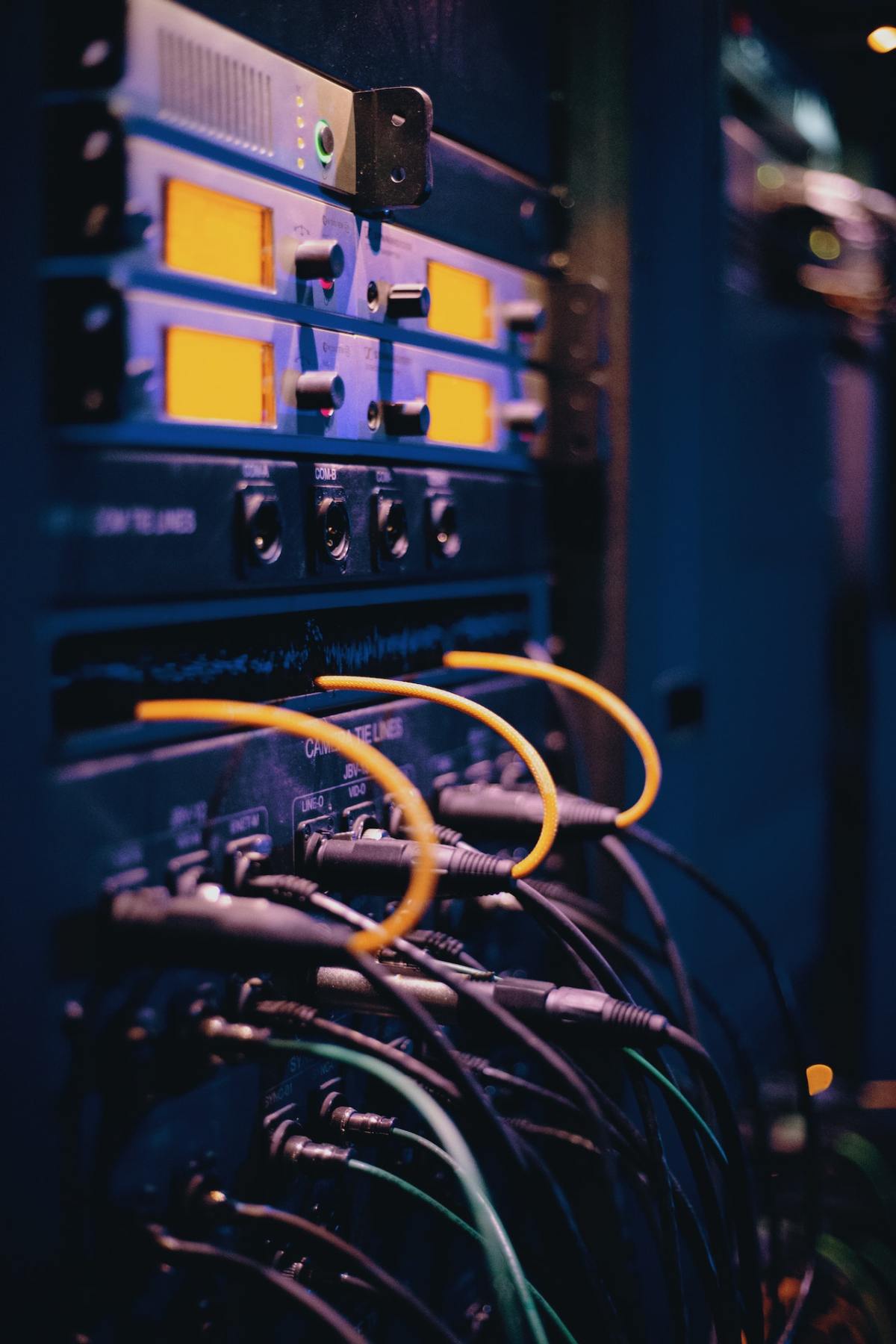
Empowering AI Clusters: Cisco’s Ethernet Technology Leads the Way

The rapid advancements in Artificial Intelligence (AI) have revolutionized industries across the globe, from healthcare to finance and manufacturing to transportation. However, the sheer complexity of AI workloads demands robust computing power, leading to AI Clusters’ emergence.

In this blog post, we will explore what Ethernet Technology is and how Cisco’s cutting-edge solutions are elevating the performance and resiliency of AI Clusters, propelling AI research and development to new heights.

Understanding AI Clusters

AI Clusters are high-performance computing systems specifically designed to handle the enormous computational requirements of AI applications. These clusters consist of interconnected computers or servers working collaboratively to execute intricate AI algorithms at incredible speeds. Through parallel processing and distributed computing, AI Clusters enable researchers and data scientists to analyze vast datasets, train sophisticated machine learning models, and unlock the true potential of AI.

The Significance of Ethernet Technology

Ethernet Technology, the backbone of modern networking, is a standardized family of technologies for data transmission over local area networks (LANs) and wide area networks (WANs). It provides the foundation for seamless and reliable communication between devices, facilitating data transfer, audio, and video across diverse IT environments. Cisco, a leading networking technology provider, has been at the forefront of developing and innovating Ethernet solutions to the ever-evolving needs of modern computing infrastructures.

Enhancing the Performance of AI Clusters

  1. High-Speed Data Transfer: As AI workloads demand the swift movement of massive datasets, Ethernet’s high-speed capabilities play a pivotal role in reducing data transfer bottlenecks. Cisco’s Ethernet solutions, such as 25 Gigabit Ethernet (GbE), 40GbE, and even 100GbE, ensure that AI Clusters can move and process data without compromising performance.
  2. Low Latency: Real-time AI applications, such as autonomous vehicles and natural language processing systems, heavily rely on low-latency networking. Cisco’s advancements in Ethernet technology provide ultra-low latency communication, reducing the time required for data to travel between nodes in the cluster. This optimized data flow enables AI Clusters to deliver faster and more accurate results.
  3. Scalability: AI research is an iterative process that requires constant experimentation and adaptation. Cisco’s Ethernet technology allows for seamless scalability, making it easier to expand AI Clusters as computational demands increase. This flexibility ensures that AI researchers can adapt their infrastructure to tackle complex AI tasks without network capacity limitations.

Boosting Resiliency and Reliability

  1. Network Redundancy: AI Clusters require a robust and reliable network to prevent data loss and ensure smooth operation. Cisco’s Ethernet solutions incorporate redundancy protocols, such as Rapid Spanning Tree Protocol (RSTP) and Link Aggregation Control Protocol (LACP), to protect failover and ensure uninterrupted data flow even during network failures.
  2. Traffic Prioritization: With AI Clusters often hosting multiple concurrent applications, proper traffic prioritization is crucial. Cisco’s Ethernet technology supports Quality of Service (QoS) mechanisms, enabling administrators to allocate bandwidth based on application priorities. This feature ensures critical AI workloads receive the necessary network resources, optimizing cluster performance.

The future of AI research and development is intrinsically tied to the performance and resiliency of AI Clusters. As the demand for computing power continues to rise, the role of Ethernet Technology in enhancing these clusters cannot be overstated. Cisco’s dedication to pushing the boundaries of networking technology has resulted in cutting-edge Ethernet solutions that empower AI Clusters with unmatched speed, reliability, and scalability. Through their innovative contributions, Cisco is undoubtedly playing a vital role in accelerating AI advancements and opening new doors to unprecedented possibilities across various industries.