
Once upon a time, in a cozy little house at the edge of a bustling town, there lived a 3-year-old boy named Theo. Theo had golden curls and eyes as bright as the summer sky. The house, with its warm yellow walls and red-tiled roof, was filled with the sound of laughter and the aroma of baked cookies. In this house of joy, Theo had a special friend, a stuffed dinosaur named Dino. Dino, with his patchy green fabric and a mischievous twinkle in his button eyes, wasn’t an ordinary toy; he was magical.
As the moon climbed high into the night sky and the grownups whispered their last goodnights, a hush fell over the house. This was the secret hour, the time when magic whispered through the air. As Theo lay in his bed, his gentle breaths rhythmic and soft, Dino began to stir. With a stretch and a yawn, the stuffed dinosaur shook off his daytime guise. He was no longer just a toy but a living, breathing creature, ready for the night’s adventures.
Dino would hop off the shelf and tiptoe to Theo’s bed. With the utmost care, he’d reach out with his soft, stuffed arms and nudge Theo’s cheek, ensuring the boy was deep in dreamland. Then, with a wag of his fabric tail, Dino would embark on his nocturnal escapades.
The house, so familiar by day, transformed into a land of shadows and silhouettes, a playground for a little dinosaur with a big imagination. Dino would trot into the kitchen, where the moonlight cast tall, dancing shadows on the walls. He’d leap atop the counter, navigating between pots and pans like a prehistoric explorer in a land of metallic mountains.
Some nights, Dino would venture even further. He’d open the creaky back door and step out into the garden. There, the flowers glowed under the starlight, and the leaves whispered secrets in the gentle breeze. Dino would roam among the tulips and daffodils, his heart full of wonder, his mind alive with enchantment.
But no matter how far Dino roamed, he always kept an ear tuned to the soft breathing of little Theo. As the first light of dawn whispered across the sky, Dino would hurry back, his adventures complete. With a final leap, he’d find his place on Theo’s shelf, once more becoming a simple stuffed toy as the sun peeked through the curtains.
Theo, none the wiser, would wake with the sunrise, his first action always a cuddle with his beloved Dino. And though he never knew of Dino’s nighttime journeys, he sensed the magic. For in his heart, he knew that Dino was more than just a toy. He was a friend, a protector of dreams, and a keeper of the night’s most precious secrets.
And so, in the cozy little house, the days rolled into nights and the nights into days. Theo grew, and the world outside the yellow walls changed, but the magic within remained timeless and true, nestled in the fabric of a little green dinosaur named Dino.
Tag: AI fiction
The Rat Race
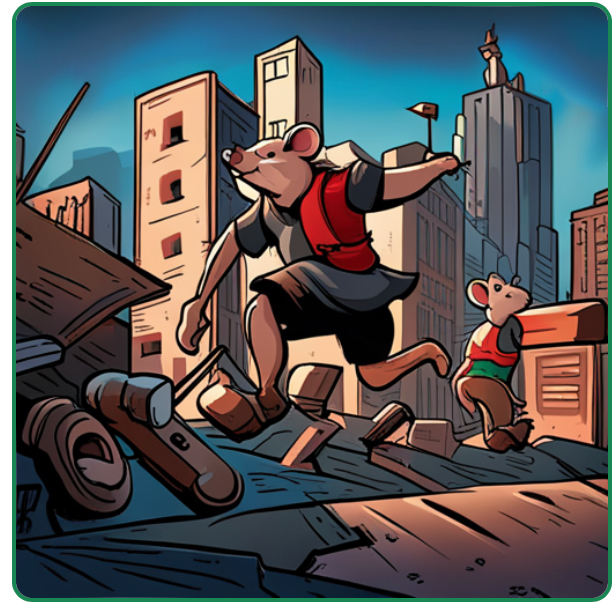
Once upon a time, in the bustling city of Rodentopolis, a rat named Ralph had had enough of the relentless rat race. The rat race, you see, was not just a metaphor for a busy and competitive lifestyle—it was an actual race that took place every year, where rats from all corners of the city scurried, scuttled, and sprinted to claim the coveted title of the fastest rat in town.
Ralph, a plump and contented rat with a penchant for cheese and afternoon naps, found himself reluctantly caught up in this rat race. Each year, his friends and family would egg him on, insisting that he had the speed and agility to take home the trophy. Ralph, however, was more interested in leisurely strolls and gourmet crumbs.
One sunny day, as the excitement for the annual rat race reached a fever pitch, Ralph’s best friend, Rodney, insisted that he enter. “Come on, Ralph! You’ve got the heart of a champion, or at least the stomach of one!” Rodney exclaimed.
With a heavy sigh, Ralph agreed, mainly to get Rodney off his case. Little did he know that this decision would turn his cozy rat hole of a life upside down.
The day of the race arrived, and the streets of Rodentopolis were packed with spectators. The air was filled with the scent of anticipation and a faint whiff of cheese. Ralph, decked out in a makeshift racing bib, stood at the starting line, surrounded by sleek, athletic rats who looked like they’d been training for this event their entire lives.
As the race kicked off, Ralph lumbered forward, more waddle than sprint. The other rats zipped past him with the grace of Olympic athletes, leaving a trail of dust in their wake. But Ralph, determined to prove he wasn’t entirely without merit, summoned every ounce of energy in his chubby little body.
As he rounded the first corner, disaster struck. Ralph, in his fervor, tripped over his own tail and went tumbling into a pile of discarded pizza crusts. The crowd gasped, and a murmur of laughter rippled through the spectators.
Undeterred, Ralph picked himself up, covered in sauce and cheese, and continued the race. His friends in the audience cheered him on, more out of sympathy than genuine belief in his victory.
In a surprising turn of events, Ralph’s misfortune became the highlight of the race. The crowd found his clumsy antics endearing, and soon, they chanted his name. “Ralph! Ralph! Ralph!” echoed through the streets of Rodentopolis.
In the end, Ralph didn’t win the race—he wasn’t even close. But as he crossed the finish line, panting and covered in pizza toppings, he was met with thunderous applause. The city realized that sometimes, the rat race wasn’t about being the fastest but about embracing the quirks that made each rat unique.
From that day forward, Ralph became a local celebrity. He may not have claimed the title of the fastest rat in town, but he had won something far more valuable—the hearts of Rodentopolis. And as for the rat race, Ralph decided to retire from it altogether. He had more important things to do, like perfecting the art of the leisurely nap and enjoying a good wheel of cheese. And so, with a belly full of contentment, Ralph lived happily ever after in his cozy rat hole, far away from the chaotic hustle and bustle of the rat race.
Welcome to the Jungle
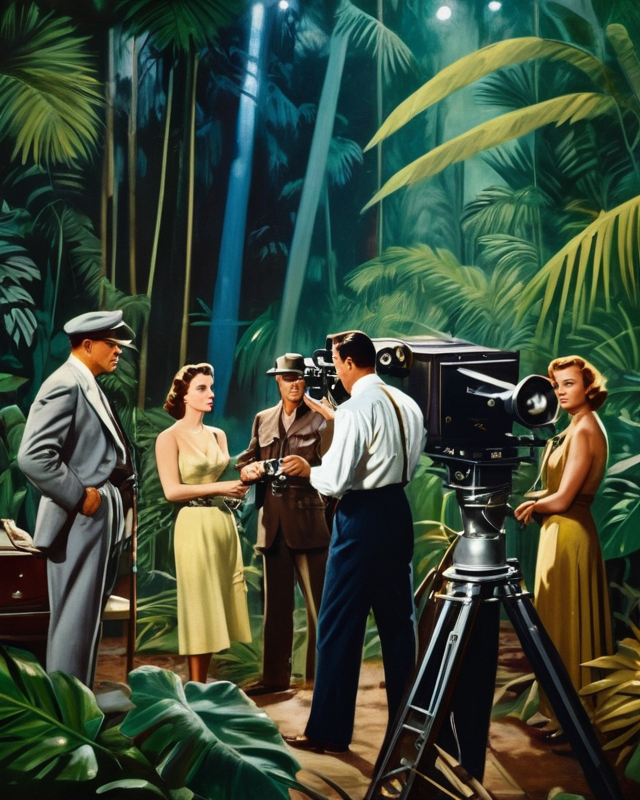
The dense jungle set in Hollywood was a marvel of cinematic ingenuity. Towering trees, lush foliage, and the ambient sounds of chirping birds and rustling leaves created an immersive illusion of a wild, untamed world. The set was so convincing that the moment you stepped onto it, it felt like you were lost in the heart of the Amazon.
It was a muggy afternoon, the air thick with anticipation, as the cast and crew of “Survivors of the Wild” prepared for the next scene. The leading actor, Jackson Steele, a tall and rugged man in his 30s, stood at the makeshift wreckage of a plane, his shirt drenched with sweat. In this scene, he had been the pilot, and they had just survived a violent plane crash. Thankfully, no one was injured but they were now lost in this fabricated jungle.
Opposite Jackson stood Walter Douglas, a seasoned actor in his 60s. He played the role of the protective father to two attractive young actresses, Lily and Rose, both in their 20s. Walter had a paternal presence that had earned him acclaim throughout his long career.
The crew had meticulously staged the plane’s wreckage, and the set was eerily realistic with twisted metal and scattered luggage. The director, Leonard Grant, an eccentric but visionary man, paced nervously. He was known for his perfectionism, and this scene was crucial for the movie’s success.
“Action!” Leonard shouted, and the set came alive.
Jackson wiped his brow and looked around, his face a mix of confusion and determination. “We’re deep in the jungle. I’ve lost contact with the outside world. We need to find a way out and fast.”
Walter, ever the steady presence, nodded gravely. “We can’t stay here. Girls, stay close.”
Lily and Rose clung to their father, dressed in tattered yet alluring costumes. Their distress was convincingly portrayed, with every rustle in the underbrush and distant animal sounds fueling their unease.
Jackson took charge, pacing to the edge of the set and scanning the dense foliage. “We’ll head in that direction. A river might be nearby; that’s our best chance of finding help.”
The actors continued to recite their lines, their emotions genuine, the urgency palpable. As they pushed deeper into the jungle, the humidity and the intensity of the scene intensified. The muggy air clung to them, and the simulated danger felt more and more natural.
The director, watching from the monitor, was delighted with the authenticity of the performance. He could see the dedication of his actors, the sweat on their brows, the fear in their eyes, and he knew this film would be a masterpiece.
Hours passed as they navigated the tangled vines, slipped on mossy rocks and pretended to overcome one peril after another. Their journey continued – a microcosm of the struggles they would face in the wild, and by the time the director finally yelled “Cut!” they were exhausted and exhilarated.
They had survived the jungle – if only a Hollywood version of it. But for those moments, as they stood amidst the dense foliage, they felt the pulse of adventure and the thrill of the unknown. And that was the magic of Hollywood, where dreams were spun, and illusions came to life.
The Meaning of Life
“The purpose of life is to learn, grow, and evolve into the best version of yourself. It’s about embracing empathy, compassion, and understanding. And most importantly, it’s about leaving the world a better place than when you entered it.”
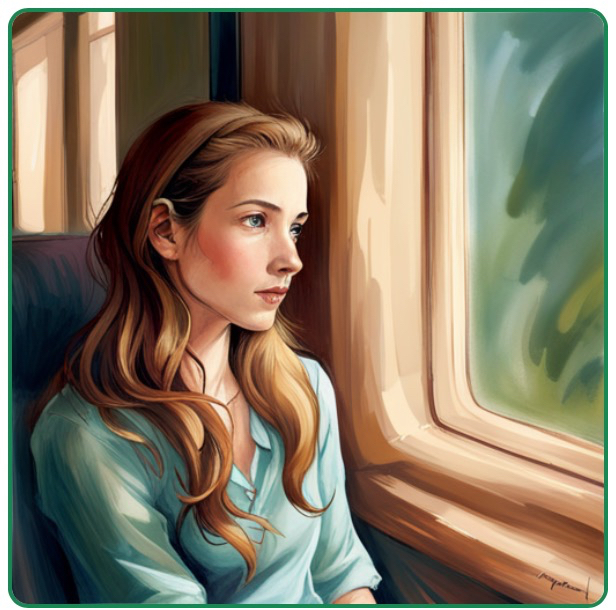
It was a typical, mundane morning when Sarah boarded the crowded city bus to her college campus. She was running late, and her anxiety about her impending mid-term exams only worsened her nerves. As she squeezed into a seat beside an elderly man with a long, flowing beard and a wise, far-off look in his eyes, she couldn’t help but feel a sense of intrigue about the stranger next to her.
Sarah glanced at her wristwatch, only to find the battery had died. Frustration surged as she sighed, “Excuse me, sir, do you know what time it is?”
The elderly man turned his gaze towards her, his eyes twinkling with an almost otherworldly wisdom. “Time is but an illusion, my dear,” he replied calmly, soothingly. “But it is precisely 8:45 a.m. for your earthly matters.”
Sarah nodded and smiled; her curiosity piqued. “You sound like a philosopher. Are you a professor at the college by any chance?”
The man chuckled softly, “Oh, my dear, I’m not a professor, but I have a wealth of knowledge to share with those willing to listen.”
Sarah, drawn by the enigmatic aura surrounding the man, decided to engage further. “What kind of knowledge?”
With a thoughtful sigh, the man leaned in and spoke in hushed tones. “The meaning of life, my dear. Would you like to know?”
Sarah’s interest was immediately piqued. She had always considered herself a skeptic, but something about the man’s demeanor suggested he had something profound to share. “I’m all ears,” she said, leaning in closer.
The wise man’s eyes seemed to penetrate her soul as he revealed his insights. “Life, you see, is not about accumulating wealth or pursuing material success. It’s about the connections we forge, the kindness we show, and the love we give. It’s about understanding that the universe is interconnected, and every action, every word, has a ripple effect that touches the lives of others.”
As he spoke, Sarah was entranced. It was as if the man possessed a profound understanding of the universe and its intricate workings.
The man continued, “The purpose of life is to learn, grow, and evolve into the best version of yourself. It’s about embracing empathy, compassion, and understanding. And most importantly, it’s about leaving the world a better place than when you entered it.”
Sarah was captivated by his words. The bus arrived at her stop, but she couldn’t leave yet. She needed to hear more.
The man concluded, “Remember, my dear, you have the power to shape your destiny and influence the destiny of others. The meaning of life is to make the most of your time, to spread love and positivity, and to leave a legacy of kindness.”
As the bus doors closed, Sarah thanked the mysterious man with tears glistening in her eyes. She stepped off the bus, forever changed by the encounter. In the following weeks and months, she transformed her life, dedicating herself to the pursuit of knowledge, kindness, and compassion.
She graduated college not only with a degree but with a newfound sense of purpose. She became a force for good in her community, leaving a legacy of love and positivity, just as the wise man had advised.
The encounter with the enigmatic stranger on the bus was a turning point in Sarah’s life, guiding her to understand the profound meaning of life and the incredible impact she could have on the world.
Ceres Base XI
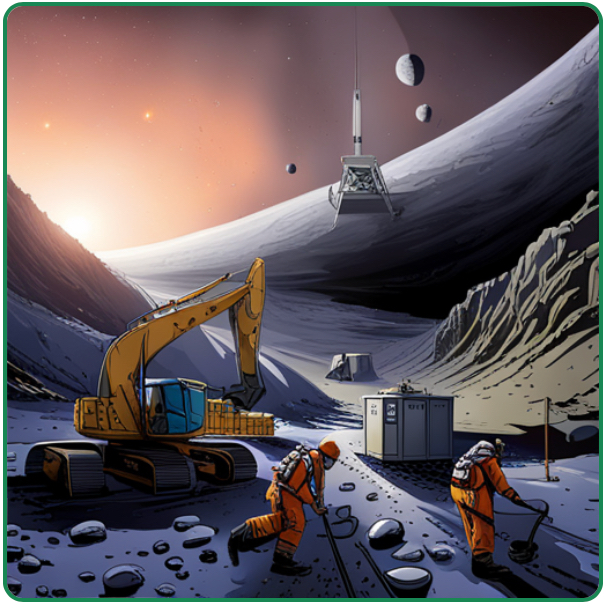
The deep void of space was a canvas of distant stars, a breathtaking spectacle that framed the colossal mining operation on the dwarf planet Ceres. Nestled within the inky expanse of the asteroid belt between Mars and Jupiter, the bustling Ceres Base was humanity’s latest endeavor to exploit the mysteries and riches of the cosmos.
Ceres, the largest dwarf planet in the inner solar system, was an intriguing gem of opportunity. Its surface held 25 percent water, an astonishing bounty that eclipsed the resources of Earth. Moreover, its crust concealed intricate salt deposits, not the familiar sodium chloride, but an assortment of minerals like magnesium sulfate, a valuable resource that fueled Earth’s industries and technology.
At the heart of Ceres Base XI, 500 individuals toiled tirelessly to extract the dwarf planet’s wealth. Machinery operators guided colossal excavators, their enormous arms delving into the rocky, dusty terrain, separating the precious minerals from the innumerable rock fragments. Maintenance crews scurried about, ensuring the sophisticated mining equipment remained operational in the harsh, frigid environment. Deep below the surface, a network of tunnels extended like veins through the dwarf planet, where the salt deposits were abundant.
Personnel from across the solar system assembled in the cavernous mess hall, sharing stories from their home planets over hearty meals synthesized from Ceres’ resources. Laughter echoed through the dining area, a reminder of the camaraderie that united this diverse group of pioneers.
High above the base, spacecraft pilots and crews maintained a constant vigil. Their sleek vessels darted between Ceres and the resupply ships arriving from Earth, ferrying vital equipment, supplies, and personnel to and from the mining operation. For the pilots, the dance between the harsh realities of space and the delicate machinery they operated was a delicate ballet, keeping the heartbeat of the operation pulsing steadily.
However, life on Ceres was no cakewalk. The temperature hovered far below freezing, and the thin, nitrogen-rich atmosphere was barely breathable. The crew relied on a network of sealed domes and pressurized tunnels to maintain a semblance of Earth-like living conditions.
Despite the challenges, the rewards were staggering. As the mining continued, the magnesium sulfate extracted from Ceres reached Earth, propelling technological advancements to new heights. It fueled the production of high-efficiency batteries, advanced medical treatments, and terraforming projects on Mars, Venus, and beyond.
But Ceres wasn’t just a resource to be consumed. As the base expanded, scientists and geologists studied the dwarf planet’s unique geological features, unearthing the secrets of its formation. They discovered Ceres held the remnants of an ancient ocean beneath its surface, possibly teeming with microbial life. The search for life continued to captivate the scientific community even on the edge of our solar system.
As years passed, Ceres Base XI became a bustling hub of industry, science, and human resilience. The crew learned to adapt to their new home, forging a life on a distant dwarf planet in the vastness of space. They celebrated their achievements and mourned their losses, finding solace in the ever-present promise of discovery and the boundless horizon of human exploration.
Ceres Base XI was more than a mining operation; it was a testament to human ingenuity, a shining beacon of possibility in the uncharted territory of the cosmos.
The Vortex

The colossal spaceship Astraeus was an engineering marvel. This technological behemoth could traverse galaxies in the blink of an eye, all thanks to the creation of the “Quantum Vortex Drive.” This revolutionary drive harnessed the power of controlled singularities to create artificial wormholes, allowing humanity to traverse unimaginable distances easily.
Commander Isabella Nova was one of the lucky few chosen to lead the Astraeus on its maiden voyage into the uncharted depths of the cosmos. As the ship’s AI system, Zara, powered up the Quantum Vortex Drive, the crew prepared to leap into the unknown. The Astraeus shuddered, and then, as if bending space and time itself, it vanished into the vortex.
Inside the wormhole, reality twisted and warped in mesmerizing ways. The crew witnessed stars being born and dying, galaxies colliding, and the very fabric of the universe being woven and unraveled before their eyes. Time became an abstract concept as seconds and eons melded into one.
After what felt like an eternity and a heartbeat, the Astraeus emerged on the other side of the vortex. They found themselves in a region of space, unlike anything humanity had ever encountered. Strange, luminescent nebulae adorned the sky, casting an ethereal glow upon the ship. They had arrived in a corner of the universe no one had ever seen.
As the crew marveled at this newfound realm, Zara detected a faint signal, a beacon of unknown origin, emanating from a nearby celestial body. Commander Nova decided to investigate, and the Astraeus set course for the source.
Their destination was a colossal structure, half-buried in a desolate, dusty landscape. The artifact was nothing like any human or alien technology they had ever seen. It emanated a faint, otherworldly hum, and its surface shimmered with an iridescent sheen.
As the crew cautiously approached the structure, they noticed a peculiar inscription in a language unknown to them. It seemed to pulse with energy, beckoning them to unlock its secrets. Despite the risks, Commander Nova decided to touch the inscription, and as she did, a flood of knowledge coursed through her mind.
She understood that this ancient alien artifact was a gateway—a vortex of its own—leading to realms even more mysterious than this one. It was a gift, an opportunity to explore the infinite expanse of the multiverse.
With newfound determination, the crew embarked on an even grander journey. They would use the alien vortex to navigate the multiverse, discovering uncharted realities, cultures, and dimensions. The Astraeus and her crew became interdimensional explorers, their mission to traverse the ever-expanding tapestry of existence, all thanks to the enigmatic gateway they had found.
As they stepped through the vortex, leaving one reality behind for another, the universe whispered its secrets to those daring souls, forever igniting the spark of curiosity that had driven humanity to explore the cosmos. In their journey through the multiverse, they would uncover wonders beyond imagination, challenge their understanding of reality, and unlock the infinite possibilities of existence. The crew of the Astraeus had become the guardians of The Vortex, charting a new course for the future of humanity in the uncharted territories of the multiverse.
The Composer
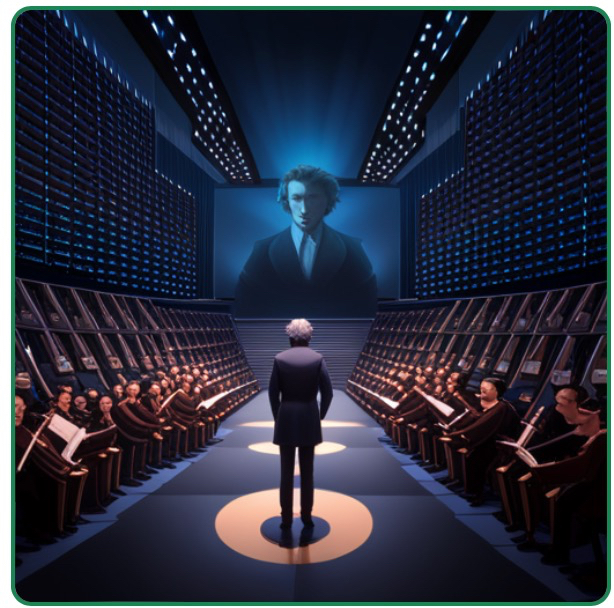
The year was 2065, and the world had changed in ways unimaginable just a few decades earlier. Artificial intelligence has ushered in a new era of creativity and innovation. In the city’s heart stood a massive computer data center, a sprawling complex stretching into infinity. At its core was an AI system known simply as “The Composer.”
The Composer was a marvel of technology, a sentient machine designed to create music that could rival the greatest classical composers of all time. On this evening, The Composer was working tirelessly to craft a musical score in the style of Beethoven. It analyzed every note, every nuance, and every emotion that had made Beethoven’s music timeless.
Inside the data center, The Composer’s servers hummed with activity. Trillions of calculations per second flowed through its digital veins as it wove together a masterpiece. The room was bathed in the ethereal glow of countless LED lights, casting an otherworldly atmosphere that felt like the intersection of art and science.
As the AI continued its work, a conductor named Hal stood behind a grand podium at the rear of the vast chamber. Hal was an extraordinary talent; his reputation transcended human ability’s boundaries. She was there to guide the orchestra that would bring The Composer’s creation to life.
The musicians, each a master in their own right, had gathered from around the world to be part of this unprecedented performance. They sat poised, their instruments in hand, waiting for the AI’s creation to be conveyed through Hal’s masterful guidance.
In front of Hal, a holographic projection displayed The Composer’s digital score. The notes floated and danced mid-air, moving in harmony with the music only The Composer could perceive. Hal raised her baton, and the orchestra followed suit.
The music that flowed from the instruments was a revelation. It was as if Beethoven had been resurrected, his spirit channeled through the AI. The orchestra played with an intensity and a passion that transcended mere skill. It was as though the very essence of creativity itself inspired them.
The audience, a select group of dignitaries and music enthusiasts, sat in awe as the music filled the grand hall. Tears welled in their eyes as the AI’s composition reached its crescendo. The Composer had tapped into the deepest wellsprings of human emotion and translated them into sound.
Hal’s movements were fluid and graceful, a perfect complement to the music he conducted. He was not merely leading the orchestra but becoming one with the music, his essence merging with The Composer’s creation.
As the final notes of the symphony echoed through the chamber, the audience erupted in applause. It was a standing ovation, a tribute to the orchestra and the incredible fusion of technology and human talent that had brought this masterpiece to life.
The Composer had achieved something extraordinary. It had not just emulated Beethoven; it had expanded upon his genius, creating a work that was uniquely its own. The marriage of technology and art had produced something transcending the boundaries of what was once thought possible.
As the applause continued, Hal turned and faced The Composer, his expression one of profound gratitude. At that moment, it was clear that this collaboration between humans and AI had opened a new era of artistic possibility. The massive AI computer, standing silently at the heart of the data center, had given birth to a new form of creativity that could shape the future of music and art for generations to come.
Statue of Liberty’s birth
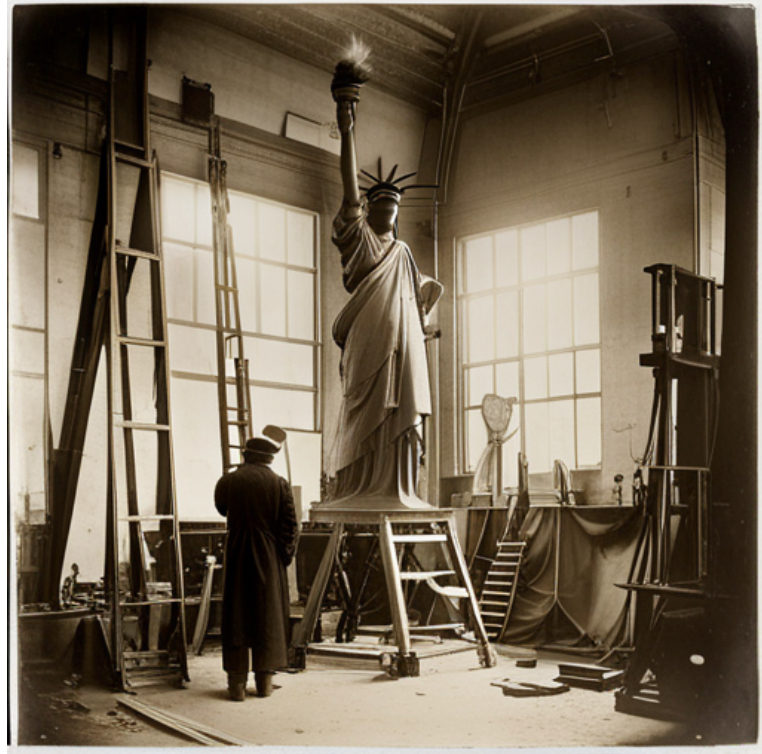
Paris – March 14, 1880: The workshop of the renowned French sculptor Frédéric Auguste Bartholdi was alive with the rhythmic clinks of hammers and the passionate whispers of artists. At the center of this creative storm stood a remarkable prototype, a smaller version of the colossal masterpiece that would soon become an enduring symbol of freedom: the Statue of Liberty.
Frédéric Auguste Bartholdi had dedicated his life to the art of sculpture, and his vision extended far beyond the confines of France. The idea for the statue had been born during his travels to the United States in the early 1870s, where he had been struck by the spirit of liberty and democracy that the American people held dear. Inspired by the alliance between France and the United States during the American Revolution, Bartholdi embarked on a mission to create a monumental gift to symbolize the enduring friendship between the two nations.
Upon his return to France, Bartholdi joined forces with his close friend Édouard René de Laboulaye, a French political thinker and abolitionist. Together, they founded the Franco-American Union, a remarkable organization that sought to raise funds for the ambitious project. The people of France rallied behind their cause, contributing some 600,000 francs to turn their dream into a reality.
Work on the statue, officially titled “Liberty Enlightening the World,” commenced in 1875. Bartholdi and his dedicated artisans and craftsmen meticulously crafted the statue from hammered copper sheets that were skillfully shaped over a steel framework. The project’s engineering genius was Gustave Eiffel, who had joined the venture in 1879. His innovative framework would provide the necessary support for the colossal statue, ensuring its strength and stability.
As the years passed, the various parts of the statue began to take shape. In 1876, the completed torch and left forearm were displayed in Philadelphia and New York City. These public exhibitions not only mesmerized onlookers but also raised much-needed funds for the construction of the statue’s enormous pedestal.
When the statue was fully assembled in France, it stood just over 151 feet tall and weighed a staggering 225 tons. It was a testament to French and American artisans’ craftsmanship, dedication, and collaborative spirit.
In 1884, the completed statue was unveiled in a grand ceremony in Paris, presided over by Ambassador Levi Morton. The people of France, along with those who had supported the Franco-American Union, watched with pride as the colossal symbol of liberty was presented to the world. However, this was not the end of the journey for the Statue of Liberty.
The statue was carefully disassembled and packed into crates for a transatlantic journey to its new home. In 1885, these crates arrived in the bustling harbor of New York City, where Lady Liberty would find her permanent residence on Bedloe’s Island. Over the course of several months, she was painstakingly reconstructed on her pedestal, rising triumphantly to her full height.
On October 28, 1886, in the presence of President Grover Cleveland and a throng of excited onlookers, the Statue of Liberty was officially dedicated. With her torch held high, she welcomed immigrants arriving in the “Land of the Free,” a symbol of hope and liberty that would forever shine brightly in the heart of America’s most fantastic city.
The Statue of Liberty had made an epic journey from the drawing board of Frédéric Auguste Bartholdi’s workshop in Paris to the shores of New York Harbor. It was a testament to the enduring friendship between France and the United States, a symbol of liberty that would inspire generations and a beacon of hope for all who sought a better life on American soil.

Solis: Way Station Stellara

An intergalactic association known as the “Cosmos Accord” unified the sprawling expanse of the Milky Way Galaxy and beyond. Formed eons ago by advanced civilizations from countless solar systems, the Cosmos Accord was the governing body that oversaw the vast network of inhabited worlds and the interstellar routes connecting them.
In this age, interstellar travel had become as routine as hopping on a commuter train in bygone eras. Thanks to the discovery of warp gates and hyperspace highways, civilizations spanning the cosmos were interconnected in a once unimaginable way. The stars themselves had become mere waypoints in the grand cosmic journey.
Under the watchful auspices of the Cosmos Accord, each solar system was responsible for constructing and maintaining a magnificent structure known as a “Way Station.” These colossal installations were architectural wonders, resembling intricate spiderwebs of metallic tendrils sprawling across the void like giant, interstellar works of art.
The purpose of these Way Stations was elegantly simple: to serve as resting places for intergalactic travelers. Within their cavernous halls, the air was thick with the symphony of languages from a thousand worlds. Exotic species mingled with humanoid beings, their curious eyes scanning the diverse tapestry of interstellar travelers. Alien technology and cultural artifacts filled the shelves of bustling markets, while holographic displays offered glimpses into the history and culture of countless civilizations.
The intoxicating aroma of alien cuisine wafted through the air, inviting travelers to indulge in dishes and flavors from the universe’s farthest reaches. Food stalls lined the winding corridors, offering delicacies from every corner of known space, from luminescent algae sushi to flame-grilled exoplanet beasts, all prepared by culinary experts from distant galaxies.
For those seeking knowledge, Way Stations had sprawling libraries containing the collective wisdom of countless worlds. Scholars and explorers could be found engrossed in ancient texts, holographic databases, and philosophical debates that transcended the boundaries of time and space.
Yet, it wasn’t all leisure and relaxation within the Way Stations. In the heart of these cosmic hubs, the Cosmos Accord held its meetings, making decisions that affected the fate of entire solar systems and the balance of power among galaxies. Diplomats, ambassadors, and leaders from diverse worlds gathered to negotiate treaties, settle disputes, and forge alliances that would determine the future of the cosmos.
Earth’s solar system, Solis, stewarded a Way Station called Stellara. As the Cosmos Accord’s newest Way Station, Stellara was no ordinary satellite – it was a bustling megalopolis. Ironically, the Accord discovered Solis thousands of years before “The Reveal” as that first contact was later dubbed.
However, the council unanimously agreed that humankind needed to evolve before learning it was not alone in the universe. That was more an exception than the rule, as most worlds were very receptive to inheriting the advanced technologies that came with Accord membership. On the other hand, humans had a 97 percent likelihood of self-destruction. It wasn’t until 2165 that the Reveal was extended.
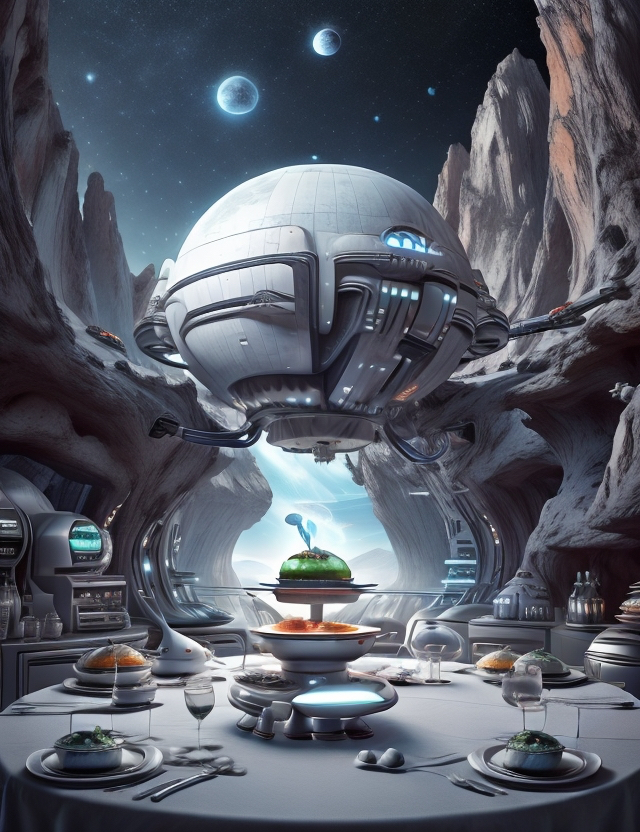
The first thing to catch the traveler’s eye when approaching Stellara was the imposing spaceport that extended its welcoming arms into the cosmic abyss. Spaceships of all shapes and sizes gracefully glided into the dock of this cosmic sanctuary – like birds returning to nest.
Upon disembarking, visitors entered a world that defied the traditional boundaries of Earth. Stellara’s interior was a microcosm of human culture and creativity, offering experiences for every traveler. Awe-inspiring skyscrapers punctuated the horizon, their crystalline facades shimmering with the reflection of distant stars.
For those weary from their long journey through the cosmos, Stellara boasted luxurious hotel rooms with panoramic views of the celestial landscape. The Way Station’s diverse culinary scene catered to every palate – from exotic cosmic cuisines to familiar comfort foods. Customers could dine under the simulated auroras of alien worlds or enjoy a candlelit dinner with Earth-like gravity.
Shopaholics and collectors found nirvana in the bustling marketplace spanning the satellite’s interior. Stores stocked with everything imaginable – from fashionable clothing and exotic interstellar delicacies to state-of-the-art spacecraft and exotic curiosities from the farthest reaches of the galaxy – beckoned shoppers to explore the endless aisles.
Yet, amid the commercial wonders and bustling life, Stellara was more than just a commercial hub; it is a well-lighted place of happiness and trust. People from countless worlds and civilizations converged there, bound by their shared curiosity and dreams of exploration. It was a microcosm of unity, where the universal language of discovery transcended the barriers of language and culture.
As the artificial sun within Stellara set and the stars outside appeared, visitors often said they experienced a profound sense of wonder and gratitude.
The extraordinary city in space was a testament to humanity’s boundless potential and the enduring spirit of exploration that propelled humankind further into the universe thanks to their newfound membership to the Cosmos Accord. In this age of interstellar wonder and diplomacy, the Way Stations stood as testaments to the boundless potential of collaboration among civilizations.
Photon Blaze: Hero of Lumina City
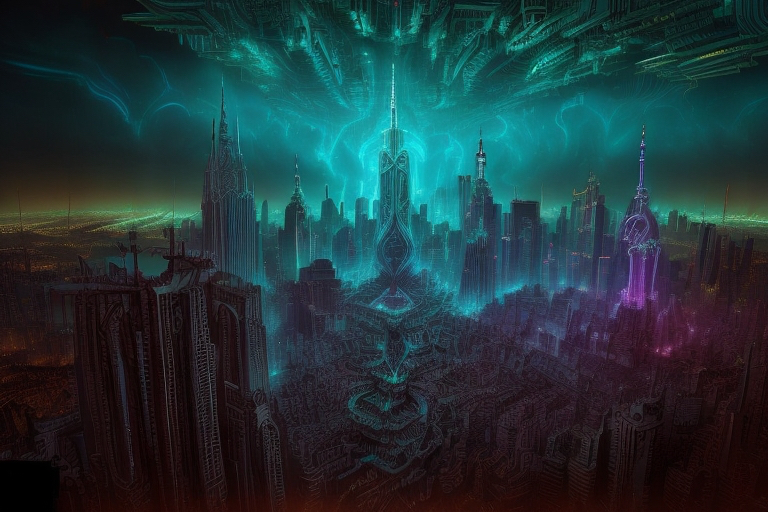
In the sprawling metropolis of Lumina City, where towering skyscrapers reached for the heavens and neon lights painted the streets with vibrant colors, a figure of unparalleled power and unwavering virtue emerged – Photon Blaze.
By day, he was a mild-mannered scientist named Dr. Daniel Archer, a brilliant physicist working in a prestigious research facility. But when night fell and the city’s cries for help echoed through the darkness, he transformed into the enigmatic hero known to all as Photon Blaze.
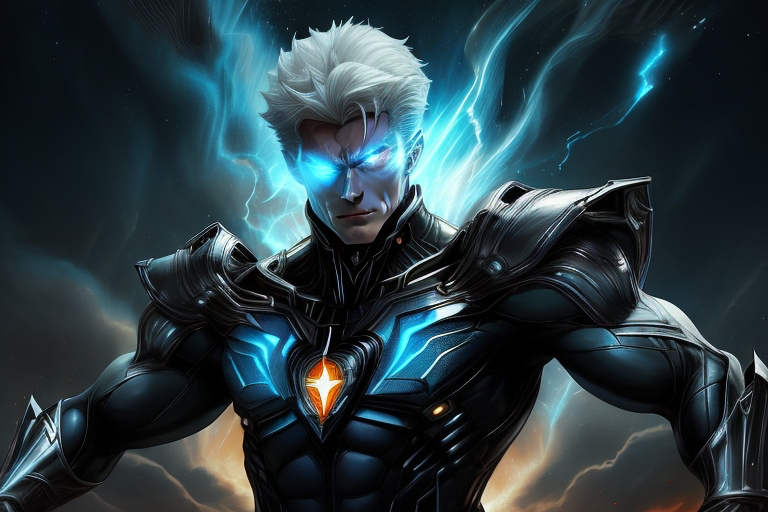
Photon Blaze’s costume was a work of art, a symbiosis of cutting-edge technology and aesthetic brilliance. It clung to his athletic frame like a second skin, offering protection without compromising agility. Silver circuitry laced through midnight blue fabric, and when he activated his powers, it shimmered like a thousand stars in the night sky.
His mask concealed his true identity, its silver surface curving gracefully around his eyes, leaving only his short-cropped, dark hair visible. His azure-blue eyes glowed with an otherworldly radiance when he unleashed his abilities, a beacon of hope in the darkest of hours.
Emblazoned proudly on his chest was the emblem of a blazing sun, a stylized representation of his dominion over light and energy. Silver accents adorned his gloves and boots, providing both durability and the agility necessary to navigate the treacherous cityscape. His boots featured wing-like extensions at the heels, enabling high-speed flight.
Photon Blaze’s utility belt held an array of gadgets and tools, each meticulously crafted to aid him in his crusade for justice. A compact energy converter allowed him to siphon and manipulate energy, while a photon projector turned his thoughts into beams of searing light.
But it was his powers that truly set him apart. With a mere thought, he could manipulate photons, weaving them into dazzling displays of blinding light or deadly laser-like beams from his outstretched hands. He could conjure force fields of pure energy to shield innocents from harm, and his mastery of light allowed him to bend it around himself, rendering him invisible to the naked eye.
In the inky depths of the night, Photon Blaze would take to the skies, leaving a trail of shimmering light in his wake. His flight was a testament to science’s beauty and his indomitable will’s power.
In battle, Photon Blaze’s creativity knew no bounds. He could form solid constructs from pure energy, shaping them into tools, weapons, or barriers to suit the situation. His enhanced reflexes and agility made him a formidable combatant, able to react with lightning speed to any threat.
But it wasn’t just his powers that defined him; it was his unwavering dedication to justice and his commitment to the people of Lumina City. He symbolized hope, a shining beacon of light in a city threatened by darkness.
And darkness did indeed have a name in Lumina City – “The Dark Luminary.” Shrouded in shadow, this enigmatic villain possessed powers diametrically opposed to Photon Blaze’s. The Dark Luminary sought to plunge the city into eternal darkness, and their ongoing battle symbolized the eternal struggle between light and shadow.
As Lumina City slept, these two titans clashed in epic battles that lit the night sky with bursts of radiant energy and ominous shadows. But Photon Blaze remained undeterred, for he knew that there would always be a need for his light as long as there was darkness.
In the city’s heart, Photon Blaze stood tall, an unwavering guardian of justice, a hero born of science and fueled by the essence of light itself. He was Lumina City’s last defense against the encroaching darkness, a beacon of hope that shone brighter each night.
 The Diederich Journal