In the not-so-distant future, when technology had unlocked the frontiers of the skies, a magnificent vessel known as the USS Stratosphere graced the Earth’s atmosphere. This majestic airship, designed by the brightest minds of the age, was a testament to human innovation and ambition. The USS Stratosphere was not merely a vehicle; it was a marvel. It was built to stay aloft for weeks, even months, at a time, floating gracefully at the edge of space.
Its primary mission was research, exploring the mysteries of the upper atmosphere and conducting experiments that were previously unimaginable. But, to defray the exorbitant costs of its operations, a unique and thrilling opportunity was offered: adventurous billionaires could purchase tickets for a one-way journey to the edge of space. This experience was the ultimate status symbol, a fusion of luxury and daring that only the elite could afford.
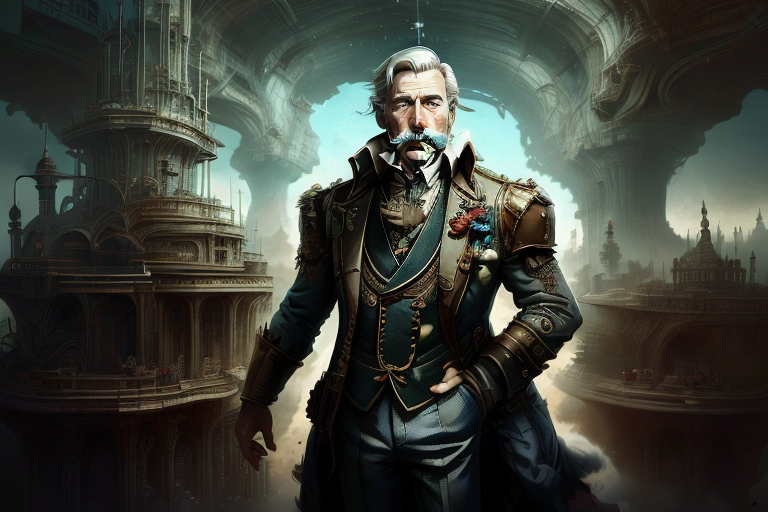
The journey began at a state-of-the-art launch facility, where the lucky adventurers gathered. Among them was Sir Reginald Worthington III, a British industrialist with an insatiable appetite for adventure and a penchant for pushing the boundaries of possibility. His tailored suit and extravagant mustache were as much a part of his persona as his boundless curiosity.
After an opulent meal prepared by a Michelin-star chef aboard the USS Stratosphere, the adventurers changed into their jumpsuits, their hearts pounding with excitement and trepidation. The interior of the airship was a testament to luxury. Velvet-lined lounges, crystal chandeliers, and views of the Earth below through enormous panoramic windows offered an experience that even the wealthiest billionaires rarely encountered.
But the true adventure was yet to come. After ensuring their parachutes and pressurized suits were in order, the passengers embarked on their most audacious escapade. They made their way to the wings of the USS Stratosphere, donning helmets with built-in HUDs that displayed vital information like altitude and wind speed.
As the passengers stepped onto the wings, their hearts raced. They were about to leap into the abyss, trusting that the advanced technology of their suits and parachutes would carry them safely through the upper reaches of Earth’s atmosphere. With his monocle firmly in place, Sir Reginald Worthington III was among the first to take the plunge.
With a burst of adrenaline, he jumped from the wing, plummeting toward the vast expanse of space. The sensation was surreal as he free-fell through the stratosphere, the world beneath him painted in shades of blue and green. The wind currents guided him, and for a moment, he felt like a true pioneer of the skies.
Then, with practiced precision, Sir Reginald pulled the ripcord on his parachute. A moment of weightlessness followed, and the canopy billowed open, slowing his descent. He looked around, taking in the breathtaking view of the curvature of the Earth. It was a sight that only a select few had witnessed.
As he descended further, he could see the USS Stratosphere far above, a shining speck against the infinite backdrop of space. The thrill of the jump, the majesty of the view, and the sense of adventure combined into an experience that left him awestruck.
Eventually, Sir Reginald touched solid ground, his feet again firmly planted on Earth. He removed his helmet, his face flushed with exhilaration. The other adventurers followed suit, their expressions a mix of triumph and joy.
The USS Stratosphere ushered in a new era of scientific exploration and created a playground for the world’s wealthiest and most adventurous individuals. For those fortunate enough to secure a ticket, the thrill of riding the wind currents at the edge of space was a memory that would stay with them forever—a memory they would regale at opulent parties and gatherings, for the USS Stratosphere had unlocked the heavens for those who could afford to reach for the stars.
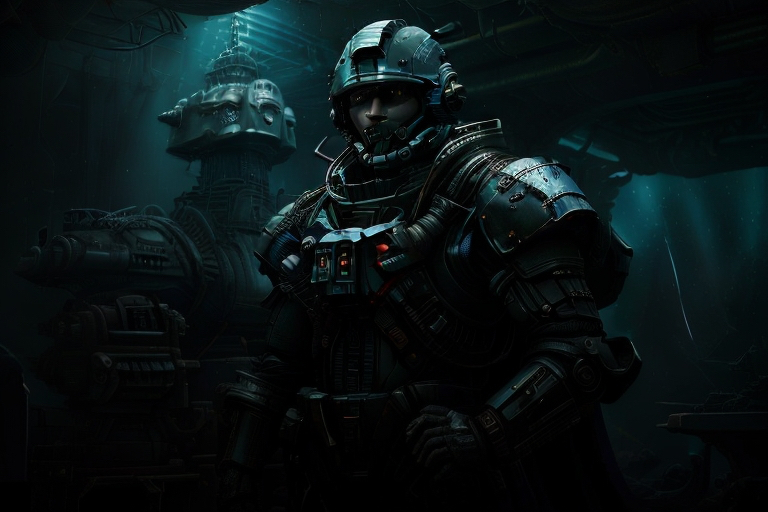
September 29, 2275: Captain Jonathan Steele stood in the dimly lit hangar bay of the USS Quantum, a vessel unlike any other in the history of human exploration. His life-support suit clung to his body, its sleek black surface shimmering with protective nanites. The helmet he held under his arm displayed an array of complex readouts, all linked to the ship’s quantum computer.
The USS Quantum was a marvel of human ingenuity, designed to traverse the uncharted territories of the Quantumverse. Humanity had long since conquered the cosmos, but the Quantumverse remained a realm of mystery and untapped potential. Here, the laws of physics operated in ways that defied conventional understanding.
One of the most enigmatic phenomena of the Quantumverse was quantum tunneling. In this reality, it wasn’t a rare occurrence in the familiar universe; it was the foundation of transportation. By manipulating quantum mechanics, objects could be translated instantaneously from one location to another. It was like space was a fluid medium through which they could flow.
The Quantumverse was an eerie realm, a place of four-dimensional oddities that challenged the limits of human comprehension. Objects existed with an extra spatial dimension, and Captain Steele knew they couldn’t be fully visualized in three-dimensional terms. Instead, various projections were used to represent these mysterious 4D entities.
One such entity was the tesseract, a four-dimensional cube. When rotated and viewed in three dimensions, it appeared as if various cubes were moving in and out of the tesseract, a mesmerizing dance of geometry that was as beautiful as it was baffling.
But the most intriguing and perilous feature of the Quantumverse was the existence of white holes. They were the inverse of the dreaded black holes that had long fascinated and terrified humanity. Instead of objects being sucked into a singularity, white holes ejected objects from their enigmatic depths.
However, what made white holes in the Quantumverse truly unique was their ever-changing forms, depending on the quantum rule region in which they were located. These regions were like pockets of distinct reality within the Quantumverse, each governed by its own quantum laws. In one region, a white hole might appear as a swirling vortex of prismatic light, while in another, it could resemble a vast, crystalline structure.
Captain Steele had been preparing for this moment for years, studying the research of countless quantum physicists and collaborating with engineers who had pushed the boundaries of technology. He had been selected to lead the maiden flight into the Quantumverse. This journey held the promise of untold discoveries and the potential to reshape humanity’s understanding of the cosmos.
His heart raced with anticipation as he stepped onto the USS Quantum’s boarding ramp. The ship’s quantum engines hummed to life and a soft blue glow enveloped the craft. The moment had arrived, and Captain Steele couldn’t help but feel a sense of awe and trepidation as the USS Quantum prepared to breach the boundaries of known reality.
With a final, resolute nod, he donned his helmet, securing it in place. The moment the helmet sealed, he spoke the words that would initiate the journey of a lifetime, “Initiate quantum drive.”
And with that, the USS Quantum vanished into the Quantumverse, leaving behind the familiar confines of space and time – venturing into the uncharted territory of four-dimensional wonders and ever-changing white holes. Captain Jonathan Steele was an intrepid explorer, boldly venturing where no one had gone before, and the mysteries of the Quantumverse awaited his discovery.
In the heart of a hidden valley, shrouded by ancient forests and concealed by nature itself, stood the enigmatic laboratory of the legendary inventor, Dr. Thaddeus Meriwether. His secluded abode was an intricate blend of arcane knowledge and relentless curiosity. Among his many astounding inventions, one stood out as awe-inspiring and terrifying—the Resurrector.
This machine, resembling an elaborate coffin, had been forged from rare metals and imbued with the forgotten arts of the past. Intricate carvings adorned its surface, etched with symbols of life and death, their meanings known only to the wise Dr. Meriwether himself. It was said that he had created the Resurrector after a painful loss, driven by a desire to defy the very laws of nature.
On a chill, moonlit evening, as the shadows deepened and the ancient laboratory stirred with hushed anticipation, Dr. Meriwether prepared to test his machine once more. He had scoured the land for a suitable subject—a person whose life had been unjustly snuffed out in the prime of their existence. Amelia Thornfield, a young woman of radiant beauty and unfulfilled dreams, was to be the first candidate in years.
As Amelia’s lifeless body lay on the cold, stone table in the heart of the laboratory, Dr. Meriwether beckoned to his loyal assistant, Elias, to assist him in this most perilous endeavor. Together, they gently lifted her fragile form and placed it within the Resurrector’s ornate chamber.
Amelia’s head rested on a pillow embroidered with golden threads, and her body was covered with an enchanted blanket, woven with the feathers of phoenixes. With meticulous care, Dr. Meriwether activated the machine. Lights flickered, tubes hummed, and arcs of blue lightning danced around the laboratory. The Resurrector came to life, emitting a low, ominous hum.
Dr. Meriwether’s heart pounded with a mix of anticipation and trepidation as he watched the resurrection process unfold. The room filled with an ethereal, otherworldly glow as the Resurrector’s magic surged through Amelia’s lifeless form. Her pale skin began to regain its rosy hue, and her chest heaved as if taking its first breath after a long slumber.
Minutes passed like hours, and then, in a crescendo of swirling energy, Amelia’s eyes flickered open. They were a striking shade of emerald, filled with bewilderment and fear as they darted around the unfamiliar surroundings. Her fingers twitched, and she drew her first ragged breath.
Elias and Dr. Meriwether watched in amazement and relief as Amelia sat up in the Resurrector, her eyes now fixed on them. She looked at her hands, her body, and her surroundings, disbelief mingling with the flicker of recognition.
“Amelia?” Dr. Meriwether whispered, his voice trembling.
Amelia’s gaze snapped to him, and tears welled in her eyes. “Dr. Meriwether? Is it truly you?”
A smile of triumph and joy crossed the doctor’s face as he nodded. “Yes, my dear. You are back among the living.”
Amelia embraced her savior, her body trembling with a mix of emotions—gratitude, wonder, and the bewildering experience of returning from the realm of the dead. The Resurrector had worked its incredible magic, defying the natural order to bring her back from the abyss.
As the laboratory buzzed with the marvel of their achievement, Dr. Meriwether and his loyal assistant, Elias, knew their invention was both a blessing and a curse. The Resurrector held the power to defy death, but it came at a cost known only to those who tampered with the balance of life and death. Amelia, alive once more, would go on to tell stories of her extraordinary journey from the afterlife. Still, Dr. Meriwether understood that the Resurrector was a fragile beacon in the darkness of forbidden magic. This beacon could illuminate the path to salvation or plunge the world into unspeakable darkness.
USS Starfleet Command Announces the Launch of Four New Spacecraft: USS Solarastrum, USS Stellarcity Odyssey, USS AstraHaven, and USS Asteria Harvestor
San Francisco, Earth – September 27, 2170 – USS Starfleet Command is thrilled to announce the successful completion of four groundbreaking spacecraft, each representing the pinnacle of human ingenuity and spacefaring capability. These remarkable vessels will significantly enhance our fleet and enable us to embark on unprecedented missions to explore the cosmos and safeguard humanity’s future.
1. USS Solarastrum
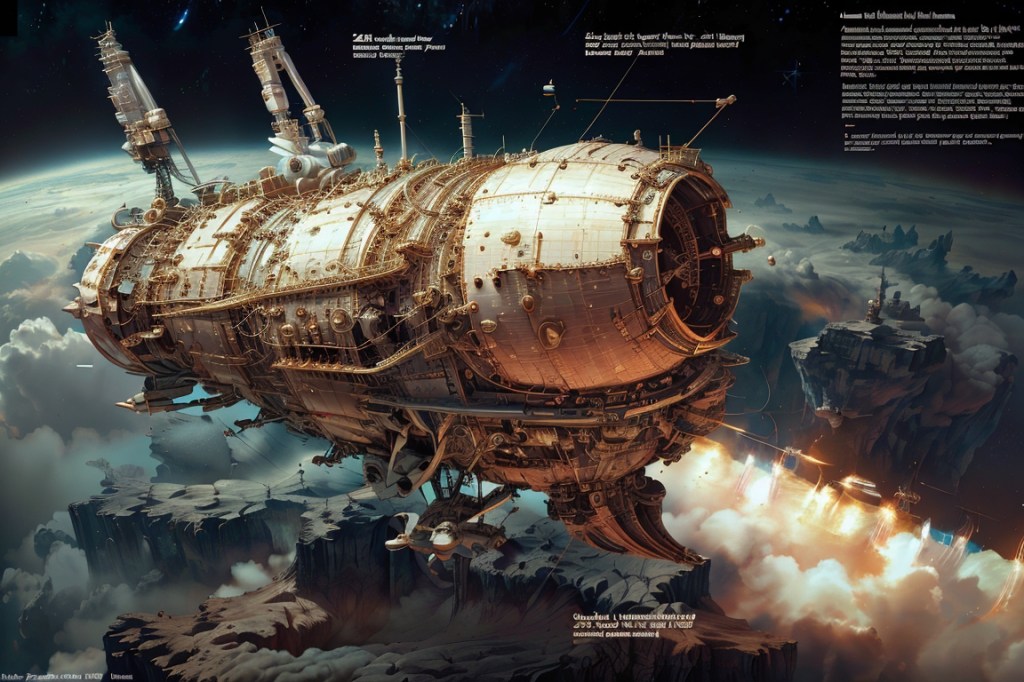
The USS Solarastrum is a colossal spacecraft that stands as a self-contained metropolis among the stars. With a crew capacity of 1,200 members, the vessel boasts cutting-edge sustainability features, including advanced recycling systems, lush green spaces, and state-of-the-art life support technologies. This engineering marvel will enable extended missions of up to 20 years to various planets within our solar system. The USS Solarastrum represents a new era in space exploration, fostering self-sufficiency and sustainability in the far reaches of the cosmos.
2. USS Stellarcity Odyssey
The USS Stellarcity Odyssey is a true marvel of engineering and innovation. This colossal spacecraft is designed to house and support a crew of 500 members on extended missions to the solar system’s inner planets. Featuring advanced technology, state-of-the-art life support systems, and artificial gravity, it ensures the well-being and productivity of its inhabitants during missions that can span up to five years. The USS Stellarcity Odyssey exemplifies our commitment to pushing the boundaries of human achievement in space exploration.
3. USS AstraHaven
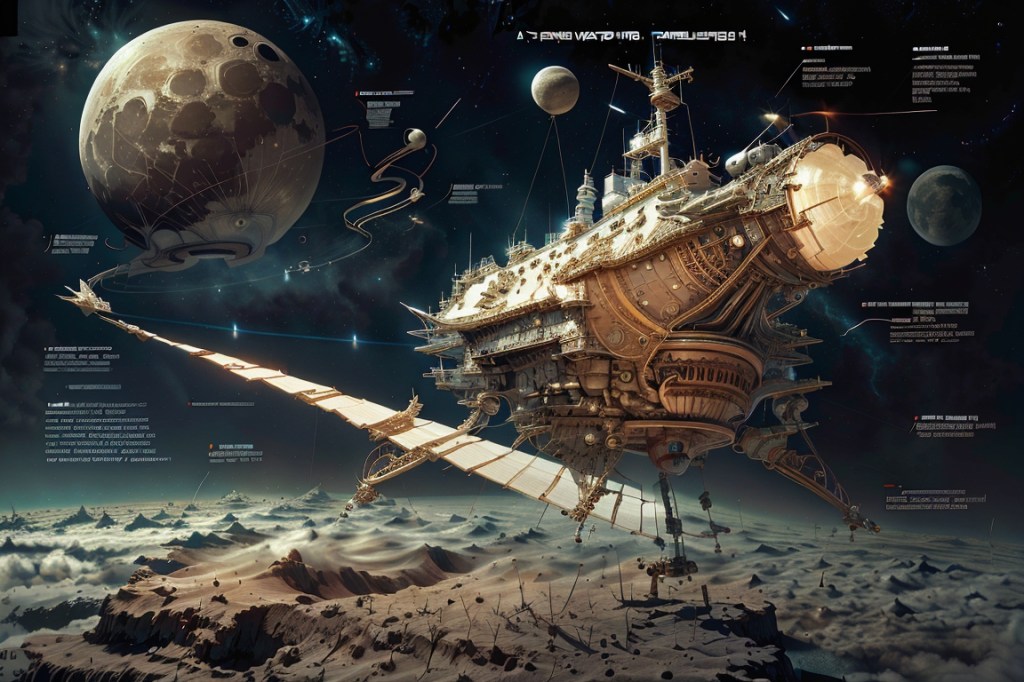
The USS AstraHaven, dubbed “Sanctuary among the Stars,” is a colossal, state-of-the-art spacecraft with the primary mission of serving as a self-contained city in space. Capable of sustaining 1,000 people for a decade, it is positioned in a stable orbit around Mars and serves as a critical lifeboat and refuge for the thriving Martian colonies. In the face of catastrophic emergencies, the USS AstraHaven stands ready to ensure the safety and survival of humanity’s expansion beyond Earth. The vessel maintains a crew of 10 on one-year rotations from Starfleet’s Mars Base 12.
4. USS Asteria Harvestor
The USS Asteria Harvestor is a colossal, unmanned spacecraft engineered to capture and transport vast, ore-rich asteroids from the asteroid belt to lunar orbit for extensive mining operations. Equipped with cutting-edge technology and a robust design, the Asteria Harvestor represents the forefront of human ingenuity in space resource exploration. It promises to revolutionize our access to valuable resources and pave the way for sustainable space development.
The missions of these four remarkable spacecrafts will commence in stages, beginning in January 2171. USS Starfleet Command is committed to advancing humanity’s presence in space and ensuring the safety and prosperity of our species as we embark on these bold new adventures.
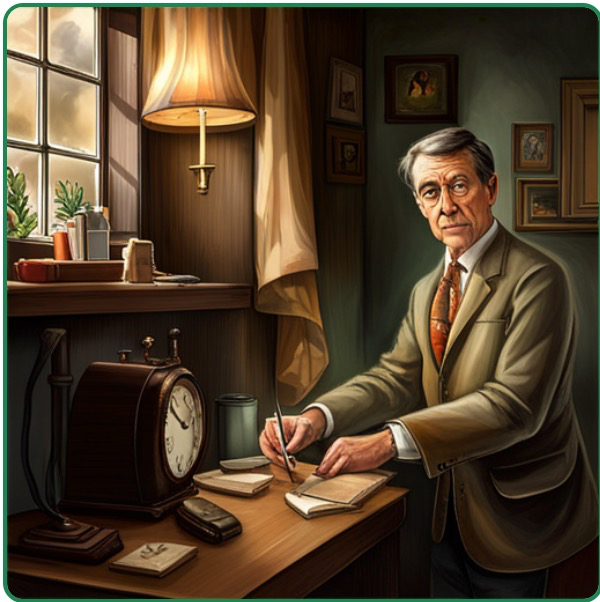
Mr. Picklefoot’s dog, Skip, saw a squirrel jump to the ground from an oak tree in a neighbor’s yard.
“Skip! Don’t pull!” Mr. Picklefoot shouted as the golden retriever lunged to intercept the squirrel. The sudden and unexpected tug caused Mr. Picklefoot to lose his balance and step forward awkwardly. He very narrowly missed biting his tongue in the process.
Mr. Picklefoot braced his feet on the curb and leaned back with all his might. Skip strained against his collar, pulling so hard that he started coughing and choking himself.
The squirrel darted over the fence of the next house and then into the backyard. It had escaped! Accepting defeat, Skip backed up and sat down beside his master. He looked up at Mr. Picklefoot with a wide grin as he panted heavily, his tongue hanging out of the side of his mouth.
Mr. Picklefoot was not amused. It was 7 a.m., and he needed to prepare for the day’s first house call. He also wanted another cup of coffee and a second scone with strawberry jam.
“Bad dog, Skip!” he shouted, waving a finger at his dog. Skip looked down at his paws.
Just then, a blue Oldsmobile sedan slowed and stopped before them. A power window hummed as it slid down.
“Mr. Picklefoot!” exclaimed the lady behind the wheel. She was about 75 with gray hair pulled back into a neat bun. “Am I ever glad to see you! My clocks need adjusting, and my smoke alarms need fresh batteries. It’s complete chaos.”
“Mrs. Knowles, it is nice to see you,” Mr. Picklefoot said, still somewhat winded from his exertions with Skip and the squirrel. “My appointment book is nearly full, but I am happy to squeeze you in for a visit as long as you don’t mind it being this evening. My last appointment is at 6 p.m. so it would be after that. Probably closer to 7 p.m.”
Mr. Picklefoot was the owner and sole proprietor of “Time is of the Essence.” His establishment specialized in setting things right following the two disruptive days associated with daylight saving time each year. With packages starting at $19.95, he would come to your home or business to adjust all clocks and replace the batteries in all smoke alarms. The service included wristwatches, both digital and mechanical.
He was always quick to correct people who referred to the clock-adjusting ritual as daylight savings time. “It’s daylight-saving time, not “savings time,” he would shriek. He’d add that the term has no hyphen if it were over email.
He spent 363 days of the year repairing mechanical watches and clocks. He never took time for a vacation or even a day off. Skip was the store’s mascot and chief customer greeter.
“7 p.m. is fine, Mr. Picklefoot,” Mrs. Knowles said, looking down at Skip. She was allergic to dogs. “I am just so relieved that you have any time.”
“I always make time when time is of the essence,” he said. “Time is money, after all.” With that, he smiled and tipped his baseball cap. Then Skip saw another squirrel and their conversation ended abruptly.
Chapter 2
As Mr. Picklefoot and Skip continued their walk, they made their way through the quiet suburban neighborhood. The houses were neatly lined along the tree-lined streets with clocks requiring precise attention.
Skip was still on high alert, his eyes darting from tree to tree, looking for any more squirrels that might tempt him into another chase. Mr. Picklefoot, on the other hand, was mentally organizing his schedule for the day. He had a list of appointments to keep, each with its unique set of timepieces and smoke alarms needing adjustment.
The morning sun was beginning to warm the air, and the scent of freshly mowed lawns and blooming flowers filled the neighborhood. It was moments like these that Mr. Picklefoot cherished the most—when he could take a break from the hustle and bustle of his busy schedule and enjoy a stroll with his loyal companion.
Turning a corner, they encountered Mrs. Ramirez, a young mother with a toddler. The little girl clutched a stuffed bunny and looked up at Mr. Picklefoot with wide, curious eyes.
“Hello, Mrs. Ramirez,” Mr. Picklefoot greeted her warmly. “How are you and little Sophie doing today?”
Mrs. Ramirez smiled; her eyes tired but kind. “We’re good, Mr. Picklefoot. But our wall clock in the living room has been running slow for weeks, and it’s driving me crazy. Can you fix it?”
Mr. Picklefoot nodded. “Of course, I can. I’ll pencil you in for tomorrow morning, say around 10 a.m.? Will that work for you?”
“That’s perfect,” she replied with a sigh of relief. “Thank you so much. Sophie loves to watch the clock, and explaining why it’s always wrong has been hard.”
As they continued their walk, Mr. Picklefoot made a mental note to bring a small toy for Sophie on his next visit. He had a soft spot for children and always tried to make their clock adjustments a memorable experience.
After a few more blocks, they reached the local park. The sun was now entirely in the sky, casting a warm, golden glow over the playground. Children ran around, laughed, and played on the swings and slides. Skip wagged his tail excitedly, eager to join in the fun, but Mr. Picklefoot gently tugged on his leash.
“Not today, Skip,” he said. “We have work to do.”
As they left the park behind, Mr. Picklefoot couldn’t help but reflect on the importance of his job. In a world that was constantly rushing forward, he was the one who ensured that time itself remained steady and reliable for his customers. It was a responsibility he took seriously, and he wouldn’t have it any other way.
With each step, he and Skip continued their walk, ready to face the challenges and quirks of time that awaited them in the quaint suburban neighborhood they called home.
Chapter 3
The evening had settled in, and Mr. Picklefoot was preparing for his appointment with Mrs. Knowles. He carefully packed his toolkit, making sure he had all the necessary tools to adjust her clocks and replace the smoke alarm batteries. Skip watched intently, his tail wagging with anticipation.
At 7 p.m. sharp, Mr. Picklefoot arrived at Mrs. Knowles’ cozy home. She greeted him at the door with a warm smile and a plate of freshly baked chocolate chip cookies.
“Mr. Picklefoot, thank you for coming,” she said, leading him to the living room. “Please, make yourself comfortable.”
Mr. Picklefoot got to work, meticulously adjusting each clock in Mrs. Knowles’ home. She watched in fascination as he carefully synchronized each timepiece, explaining the intricacies of his craft. Despite her initial stress, Mrs. Knowles found herself enjoying the process and Mr. Picklefoot’s company.
As the last clock ticked into perfect alignment, Mr. Picklefoot replaced the batteries in the smoke alarms. He checked them all to ensure they were functioning correctly. Mrs. Knowles was impressed with his attention to detail.
“Everything looks perfect now, Mrs. Knowles,” Mr. Picklefoot declared with a satisfied smile. “Your home is in sync with time itself.”
Touched by his dedication and expertise, Mrs. Knowles handed Mr. Picklefoot a small envelope. “I know you charge a fair price for your services, but please take this as a token of my gratitude.”
Mr. Picklefoot opened the envelope and found a handwritten thank-you note and a generous tip. He was genuinely touched by her kindness and thanked her profusely.
Chapter 4
The following day, Mr. Picklefoot promptly arrived at Mrs. Ramirez’s home at 10 a.m. Sophie, the curious toddler, was eager to meet him again. This time, Mr. Picklefoot had brought a small wind-up toy for her—a little clockwork bunny that hopped and clicked as it moved.
Sophie’s eyes lit up with delight as she received the gift. “Thank you, Mr. Picklefoot!” she exclaimed.
Mr. Picklefoot smiled warmly. “You’re very welcome, Sophie. Now, let’s take a look at that wall clock of yours.”
He carefully examined the clock, diagnosing the issue and making the necessary adjustments. Sophie watched with fascination, asking questions about gears and hands as Mr. Picklefoot worked his magic.
With the clock now keeping perfect time, Mr. Picklefoot handed Sophie a tiny screwdriver. “Would you like to help me, Sophie?”
Her eyes widened, and she nodded eagerly. Together, they tightened a few screws on the clock’s back cover. Sophie beamed with a sense of accomplishment.
As Mr. Picklefoot bid farewell to Mrs. Ramirez and Sophie, he couldn’t help but feel that he had made a small difference in their lives. It was moments like these that made his work truly rewarding.
Chapter 5
As the days passed, Mr. Picklefoot continued his rounds, ensuring that time was accurate and reliable for all his customers. He encountered various challenges, from antique grandfather clocks that required delicate restoration to modern digital timepieces with complex settings. Each appointment brought its unique story and connection with the people he served.
Chapter 6
One sunny afternoon, Mr. Picklefoot received a call from the local elementary school. Their tower clock, a cherished community landmark, had stopped ticking. The principal, Mrs. Johnson, was in a panic as the upcoming school play depended on the clock’s accurate timekeeping.
Mr. Picklefoot rushed to the school, accompanied by Skip. He carefully climbed the clock tower, with Skip watching from below. After a thorough examination, he discovered a worn-out gear that needed replacement. He replaced the gear with great precision, and soon, the clock was ticking again.
Mrs. Johnson was overjoyed. “Mr. Picklefoot, you’ve saved the day! Our play can go on as scheduled.”
Skip barked happily, and Mr. Picklefoot couldn’t help but feel pride in his work. He knew that his dedication to keeping time was not only about clocks but about keeping communities connected and thriving.
Chapter 7
As the seasons changed, Mr. Picklefoot’s reputation continued to grow. People from neighboring towns began to request his services, and he traveled further to meet their needs. Skip, the ever-loyal companion, accompanied him on his journeys, becoming a beloved figure in every community they visited.
Chapter 8
One evening, as Mr. Picklefoot and Skip returned from a particularly long day of clock adjustments, they walked through the park where children still played. Now a bit older, Sophie spotted Mr. Picklefoot and ran over with a bright smile.
“Mr. Picklefoot! Look at my clock!” she exclaimed, showing him a homemade cardboard clock, she had decorated.
Mr. Picklefoot knelt; his heart warmed by the sight of Sophie’s creativity. “That’s a fantastic clock, Sophie! You’ve done a wonderful job.”
She beamed with pride. “I want to be like you when I grow up, Mr. Picklefoot. I want to make sure time is always right for everyone.”
Touched by her words, Mr. Picklefoot patted Sophie’s head. “You’ll make a fantastic timekeeper, Sophie. Just remember, time is precious, and what we do with it matters most.”
And so, the story of Mr. Picklefoot, the dedicated timekeeper, and Skip, his faithful companion, ends. Their journey through the world of clocks and time had kept time accurate and touched the lives of many in their community and beyond. They had shown that in a world constantly on the move, sometimes all it took to make a difference was a little time and a lot of heart.
In the crimson glow of the Martian dawn, New Earth City rose like a phoenix from the barren landscape. Nestled within the confines of an enormous transparent dome, the city stood as a testament to humanity’s audacity and ingenuity. It was a city unlike any other, an oasis of life on the dusty, alien planet.
For years, scientists, engineers, and pioneers from every corner of Earth had collaborated on an audacious plan to terraform Mars. After decades of relentless effort, they had transformed the once lifeless, frigid wasteland into a world teeming with life. The Martian air had been thickened, the temperatures stabilized, and an artificial magnetic field had been created to protect the city from deadly solar radiation.
At the heart of this thriving metropolis was New Earth City, a genuinely international city-state. It was not beholden to the interests of any nation on Earth but governed itself as a self-sustaining ecosystem. Under the colossal dome, the city sprawled across the Martian landscape, divided into distinct districts that mirrored the diversity of Earth’s urban environments.
The Financial District gleamed with towering skyscrapers, housing the offices of multinational corporations, banks, and financial institutions. The Martian Stock Exchange, a hub of interplanetary commerce, buzzed with activity. People from all over Earth flocked here, seeking opportunities amidst the thriving interstellar economy.
In the Industrial District, the relentless hum of manufacturing plants and assembly lines filled the air. Advanced robotics and automation had made it possible to produce everything from spacecraft components to consumer goods with remarkable efficiency. New Earth City had become a beacon of technological progress, exporting its cutting-edge innovations to colonies across the solar system.
Nestled on the outskirts of the city was the Residential District, a tranquil haven where cozy houses with tidy fenced yards dotted the Martian landscape. Families from every corner of Earth had made New Earth City their home, drawn by the promise of a better life on Mars. Children played in lush parks, and dogs frolicked in the specially designed Martian dog parks, enjoying the thrill of bounding in the lower gravity.
Among the city’s residents, one figure stood out—a friendly android named Max and his robotic dog, Spark. Max had been built with a unique purpose—to assist and befriend the people of New Earth City. He walked among the humans, his artificial intelligence programming perfectly mimicking human emotions and behaviors. Max had a knack for making everyone feel at ease, and his compassion had endeared him to many.
One day, as Max and Spark strolled through the tranquil Residential District, they came across a group of children playing with a holographic soccer ball. Max’s digital eyes twinkled with delight as he joined in the game, showcasing his exceptional agility and precision. The children laughed and cheered, embracing Max as one of their own.
As the sun dipped below the Martian horizon, Max and Spark continued their walk, spreading joy and companionship wherever they went. They were not just residents of New Earth City; they were its heart and soul, a testament to humanity’s ability to create new beginnings even in the most inhospitable of environments.
In New Earth City, amid the gleaming skyscrapers, the bustling factories, and the cozy homes, Max and Spark reminded everyone that the human spirit, even when crafted from circuits and wires, could shine brightly and foster a sense of community and belonging. They were living proof that on Mars, humanity had not just built a city; they had built a new world.









 The Diederich Journal