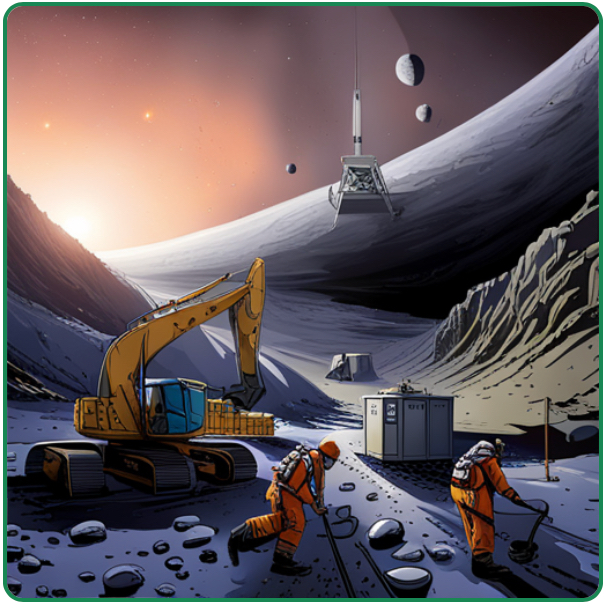
The deep void of space was a canvas of distant stars, a breathtaking spectacle that framed the colossal mining operation on the dwarf planet Ceres. Nestled within the inky expanse of the asteroid belt between Mars and Jupiter, the bustling Ceres Base was humanity’s latest endeavor to exploit the mysteries and riches of the cosmos.
Ceres, the largest dwarf planet in the inner solar system, was an intriguing gem of opportunity. Its surface held 25 percent water, an astonishing bounty that eclipsed the resources of Earth. Moreover, its crust concealed intricate salt deposits, not the familiar sodium chloride, but an assortment of minerals like magnesium sulfate, a valuable resource that fueled Earth’s industries and technology.
At the heart of Ceres Base XI, 500 individuals toiled tirelessly to extract the dwarf planet’s wealth. Machinery operators guided colossal excavators, their enormous arms delving into the rocky, dusty terrain, separating the precious minerals from the innumerable rock fragments. Maintenance crews scurried about, ensuring the sophisticated mining equipment remained operational in the harsh, frigid environment. Deep below the surface, a network of tunnels extended like veins through the dwarf planet, where the salt deposits were abundant.
Personnel from across the solar system assembled in the cavernous mess hall, sharing stories from their home planets over hearty meals synthesized from Ceres’ resources. Laughter echoed through the dining area, a reminder of the camaraderie that united this diverse group of pioneers.
High above the base, spacecraft pilots and crews maintained a constant vigil. Their sleek vessels darted between Ceres and the resupply ships arriving from Earth, ferrying vital equipment, supplies, and personnel to and from the mining operation. For the pilots, the dance between the harsh realities of space and the delicate machinery they operated was a delicate ballet, keeping the heartbeat of the operation pulsing steadily.
However, life on Ceres was no cakewalk. The temperature hovered far below freezing, and the thin, nitrogen-rich atmosphere was barely breathable. The crew relied on a network of sealed domes and pressurized tunnels to maintain a semblance of Earth-like living conditions.
Despite the challenges, the rewards were staggering. As the mining continued, the magnesium sulfate extracted from Ceres reached Earth, propelling technological advancements to new heights. It fueled the production of high-efficiency batteries, advanced medical treatments, and terraforming projects on Mars, Venus, and beyond.
But Ceres wasn’t just a resource to be consumed. As the base expanded, scientists and geologists studied the dwarf planet’s unique geological features, unearthing the secrets of its formation. They discovered Ceres held the remnants of an ancient ocean beneath its surface, possibly teeming with microbial life. The search for life continued to captivate the scientific community even on the edge of our solar system.
As years passed, Ceres Base XI became a bustling hub of industry, science, and human resilience. The crew learned to adapt to their new home, forging a life on a distant dwarf planet in the vastness of space. They celebrated their achievements and mourned their losses, finding solace in the ever-present promise of discovery and the boundless horizon of human exploration.
Ceres Base XI was more than a mining operation; it was a testament to human ingenuity, a shining beacon of possibility in the uncharted territory of the cosmos.









 The Diederich Journal